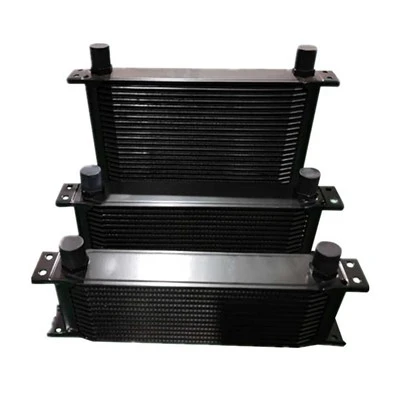
Hey there, fellow car enthusiasts! I'm a supplier of Chevy aluminum radiators, and today I wanna chat about how to test the cooling efficiency of these bad boys. As you know, a radiator is a crucial part of your car's engine cooling system. It keeps your engine from overheating, which can lead to some serious damage. So, if you're thinking about buying a Chevy aluminum radiator, it's super important to know how well it can cool your engine.
First off, let's talk about why aluminum radiators are so great. Aluminum is lightweight, which means it won't add too much extra weight to your car. It's also a great conductor of heat, so it can transfer heat away from the engine more efficiently than other materials. That's why a lot of Chevy owners are switching to aluminum radiators these days.
Now, let's get into the nitty - gritty of testing the cooling efficiency.
Bench Testing
One way to test the cooling efficiency of a Chevy aluminum radiator is through bench testing. This involves setting up the radiator in a controlled environment, kind of like a lab. You'll need a few things for this: a water pump, a heater to simulate the engine heat, and a flow meter to measure the coolant flow.
First, you connect the water pump to the radiator. The water pump is gonna circulate the coolant through the radiator, just like it would in a real car. Then, you turn on the heater and set it to a temperature that's similar to the operating temperature of a Chevy engine. As the coolant gets heated up by the heater, it flows through the radiator.
The key here is to measure the temperature of the coolant before it enters the radiator and after it leaves. You can use thermocouples for this. If the temperature difference is significant, it means the radiator is doing a good job of cooling the coolant. A well - functioning Chevy aluminum radiator should be able to drop the temperature of the coolant by a decent amount.
On - Vehicle Testing
Another way to test the radiator is by installing it in a Chevy vehicle and running it under normal driving conditions. This is probably the most realistic way to see how the radiator performs.
Before you start the test, make sure the engine is in good working condition and the coolant level is correct. Then, take the car for a drive. You can do a mix of city driving and highway driving to simulate different operating conditions.
While you're driving, keep an eye on the engine temperature gauge. If the temperature stays within the normal range, even when you're pushing the engine hard, that's a good sign. But if the temperature starts to climb too high, it could mean that the radiator isn't cooling the engine efficiently.
You can also use an OBD (On - Board Diagnostic) scanner to get more detailed information about the engine temperature. Some scanners can even record the temperature over time, which can be really useful for analyzing the radiator's performance.


Flow Rate Testing
The flow rate of the coolant through the radiator is also an important factor in cooling efficiency. A radiator with a low flow rate won't be able to cool the engine as effectively as one with a high flow rate.
To test the flow rate, you can use a flow meter. Connect the flow meter to the radiator's inlet or outlet. Then, start the engine and let it run for a few minutes to get the coolant flowing. The flow meter will give you a reading of how much coolant is passing through the radiator per minute.
The ideal flow rate can vary depending on the specific model of the Chevy radiator, but generally, a higher flow rate is better. If you find that the flow rate is too low, it could be due to a blockage in the radiator or the coolant hoses.
Pressure Testing
Pressure testing is another important step in evaluating the cooling efficiency of a Chevy aluminum radiator. A radiator that can maintain the right pressure is more likely to cool the engine effectively.
You can use a pressure tester to check the radiator. First, make sure the engine is cool. Then, remove the radiator cap and attach the pressure tester. Pump up the pressure to the recommended level for your radiator.
Let the pressure sit for a few minutes and watch the gauge. If the pressure drops, it could mean there's a leak in the radiator or the cooling system. A leak can reduce the radiator's ability to cool the engine, so it's important to fix it as soon as possible.
Comparing with Other Radiators
If you really want to know how well your Chevy aluminum radiator performs, you can compare it with other radiators. You can do this through bench testing or on - vehicle testing.
For example, you can test a Chevy aluminum radiator side by side with a stock radiator. Measure the temperature drop, flow rate, and pressure of both radiators. This way, you can see the differences in performance and decide which one is better for your needs.
Now, I know you might be thinking, "Okay, that's great info, but where can I get a high - quality Chevy aluminum radiator?" Well, we've got some awesome options for you. Check out our 1955 Chevy Aluminum Radiator, which is designed specifically for 1955 Chevys. It's built to last and will keep your engine running cool.
We also have the Chevelle Aluminum Radiator for Chevelle owners. This radiator is engineered to provide maximum cooling efficiency for your Chevelle's engine.
And if you own an OBS Chevy, our Obs Chevy Aluminum Radiator is the perfect choice. It's made with high - grade aluminum and will help your OBS Chevy perform at its best.
If you're interested in learning more about our Chevy aluminum radiators or want to discuss a potential purchase, feel free to reach out. We're here to answer all your questions and help you find the right radiator for your Chevy. Our team of experts has a deep knowledge of Chevy radiators and can guide you through the selection process.
In conclusion, testing the cooling efficiency of a Chevy aluminum radiator is an important process. By doing bench tests, on - vehicle tests, flow rate tests, and pressure tests, you can make sure that the radiator you choose will keep your engine running at the right temperature. Whether you're a casual driver or a car enthusiast, a high - performance radiator is essential for the optimal performance of your Chevy.
References
- Automotive Cooling System Handbook
- How Stuff Works: Car Radiators
- Popular Mechanics: Engine Cooling Systems