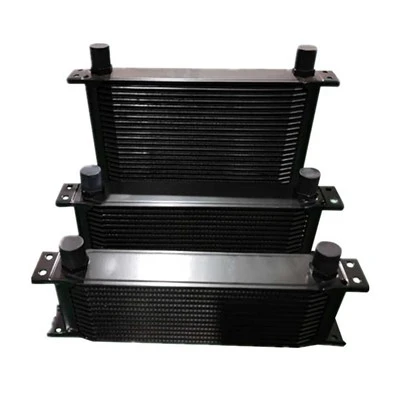
Hey there, fellow car enthusiasts! As a supplier of Aluminum Intercooler Core, I've seen firsthand how these nifty components can transform an engine. Today, let's dive into the impact of an aluminum intercooler core on the engine's power band.
Understanding the Basics
Before we get into the nitty - gritty of the power band, let's quickly go over what an intercooler core does. In a turbocharged or supercharged engine, the air compressor (turbo or supercharger) heats up the incoming air. Hot air is less dense, which means there are fewer oxygen molecules in a given volume. Since combustion in an engine relies on oxygen to burn fuel effectively, less oxygen results in reduced power output.

That's where the aluminum intercooler core comes in. It's like a mini radiator for the compressed air. As the hot, compressed air passes through the core, the aluminum material, which is an excellent heat conductor, dissipates the heat to the surrounding air. This cools the air, making it denser and packing more oxygen into each intake cycle.
The Power Band Demystified
The power band is essentially the range of engine RPM (revolutions per minute) where the engine produces its maximum power and torque. Different engines have different power bands, and factors like engine design, fuel delivery, and yes, the intercooler, can influence it.
Impact on Low - End Power
At low RPMs, a good aluminum intercooler core can make a noticeable difference. In a turbocharged engine, turbo lag is a common issue. Turbo lag is the delay between pressing the accelerator and the turbocharger spooling up to deliver boost. When the engine is running at low RPMs, the compressed air is still relatively hot if there's no proper intercooling.
With an efficient aluminum intercooler core, the cooler, denser air allows for better combustion even at low RPMs. This means that the engine can respond more quickly to throttle input, reducing turbo lag and improving low - end torque. You'll feel a more immediate push when you start accelerating from a standstill or when you need to make a quick pass at lower speeds.
Mid - Range Power Boost
The mid - range RPM is where a lot of driving happens, whether it's on the highway or in stop - and - go city traffic. An aluminum intercooler core can optimize the engine's performance in this range too.
As the engine revs up and the turbocharger or supercharger starts to provide more boost, the air gets hotter. Without a proper intercooler, the hot air can lead to detonation or pinging, which is when the air - fuel mixture explodes prematurely in the engine cylinders. This not only reduces power but can also damage the engine over time.
The aluminum intercooler core keeps the air temperature in check. Cooler air allows for a more stable and efficient combustion process. The engine can handle more boost pressure without the risk of detonation, resulting in a significant increase in mid - range power. You'll have more passing power on the highway and the engine will feel more responsive throughout your daily drives.
High - End Power Surge
At high RPMs, the engine is working hard, and the turbocharger or supercharger is pushing a lot of compressed air into the cylinders. The heat generated during this process can be extreme. An effective aluminum intercooler core is crucial to maintain power at these high speeds.
The cooler, denser air provided by the intercooler enables the engine to continue to breathe well at high RPMs. It allows for a more complete combustion of the air - fuel mixture, which translates into increased power. In racing or high - performance driving situations, this can be the difference between winning and losing. A well - designed aluminum intercooler core can extend the engine's power band to higher RPMs, giving you that extra edge when you need it most.
Material and Design Advantages of Aluminum
Now, you might be wondering why aluminum is such a popular choice for intercooler cores. Well, aluminum has several key advantages.
First off, it's lightweight. In a high - performance vehicle, every pound counts. A lighter intercooler core means less weight for the engine to carry, which can improve overall performance and handling.
Secondly, aluminum is an excellent heat conductor. It can quickly transfer heat from the compressed air to the surrounding environment. This rapid heat dissipation ensures that the air entering the engine remains cool, even under heavy load.
Lastly, aluminum is corrosion - resistant. Engines generate a lot of heat and moisture, and a corrosion - prone intercooler core would have a shorter lifespan. The corrosion resistance of aluminum ensures that the intercooler core lasts longer and maintains its performance over time.
Complementary Components
An aluminum intercooler core doesn't work in isolation. It often works in tandem with other components, such as an Aluminum Intercooler Connector and an Aluminum Intercooler Radiator.
The Aluminum Intercooler Connector is responsible for connecting the different parts of the intercooler system. A high - quality connector ensures a tight seal, preventing any air leaks. Air leaks can reduce the effectiveness of the intercooler and lead to a loss of power.
The Aluminum Intercooler Radiator further enhances the cooling process. It works in conjunction with the intercooler core to dissipate heat more efficiently. Together, these components form a comprehensive intercooling system that can significantly boost the engine's power band.
Contact for Purchase
If you're looking to enhance your engine's performance and power band, an aluminum intercooler core is a must - have. As a supplier, we offer high - quality aluminum intercooler cores, along with other related components like Aluminum Intercooler Connectors and Aluminum Intercooler Radiators. We're committed to providing the best products to meet your needs. If you're interested in purchasing or have any questions, don't hesitate to reach out. Let's work together to take your engine's performance to the next level!
References
- Heywood, J. B. (1988). Internal Combustion Engine Fundamentals. McGraw - Hill.
- Crolla, D. A. (2001). Automotive Mechanics and Engineering Principles. Newnes.