Shell and Tube Heat Exchanger
Your Leading Yangzhou Zuoer Radiator Co., Ltd. Supplier
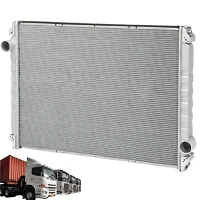
Yangzhou Zuoer Radiator Co., Ltd. is located in the Automobile lightweight Industrial Park of Yangzhou Economic Development Zone, Jiangsu Province, China. It is a professional enterprise specializing in the design and manufacture of automotive construction machinery, agricultural machinery, generator sets, air compressors and other heat dissipation systems, water radiators, oil radiators, intercoolers and new energy vehicle radiators.
Why Choose Us
High quality
The company has advanced quality assurance system ensures the continuous and stable product quality and meets the needs of all kinds of customers.
Rich experience
Our company has more than 20 years of production work experience.
Advanced equipment
The company has a first-class professional production line of aluminum radiator products, with all kinds of radiator products.
Technical support
The company has a mature and stable radiator product research and development team.


Real Factory

A shell-and-tube heat exchanger is a class of heat exchanger designs. It is the most common type of heat exchanger in oil refineries and other large chemical processes, and is suited for higher-pressure applications. As its name implies, this type of heat exchanger consists of a shell (a large pressure vessel) with a bundle of tubes inside it. One fluid runs through the tubes, and another fluid flows over the tubes (through the shell) to transfer heat between the two fluids. The set of tubes is called a tube bundle, and may be composed of several types of tubes: plain, longitudinally finned, etc.
- Shell and tube heat exchangers have more heat transfer efficiency.
- These heat exchangers are an optimal solution for swimming pool heating, mining machinery, hydraulic power packs, etc.
- These heat exchangers can be easily dismantled. Thus, cleaning and repairing is easy.
- The heat exchangers are compact in size.
- The capacity of these heat exchangers can be increased by adding plates in pairs.
- These exchangers are affordable compared to the plate type coolers.
- As the pressure test is relatively simple, one can easily locate tube leaks and fix them.
- These heat exchanger can be used in systems, which have higher operating temperatures and pressures.

Direct contact heat exchangers – As the name suggests, in the direct contact heat exchangers, there is a direct contact between hot and cold fluids. There is no physical barrier present between them. This allows the fluids at different temperatures to mix directly. As a result of this, heat and mass transfer takes place simultaneously. A cooling tower comes under these types of heat exchangers.
Co-current (parallel) flow heat exchangers – In these types of heat exchangers, both the hot, as well as the cold fluids flow in the same direction. The difference in the temperature of the hot and cold fluids continue to decrease consistently. The change in temperature occurs from one end to the other.
Recuperators – Recuperators are among the most widely used types of heat exchangers. Evaporators used in automobile radiators and ice plants come under these types of heat exchangers.
Regenerative heat exchangers – This is a popular type of heat exchanger. In a regenerative heat exchanger, the heat from a heat surface is stored and removed alternately. The surface is alternately moved in and out of the cold and hot fluid streams. At times, hot and cold currents are switched into or out of the heat surface.
Application of Shell And Tube Heat Exchanger
Sanitary and high-purity applications: With a more open design, along with stainless steel or higher alloy materials, tri-clamp connections, grooved tube sheets, and option for double tube sheets, shell and tube heat exchangers are often the preferred choice for high-purity applications like sanitary 3-A, personal care, and pharmaceutical. Their accessibility to the tube bundle also facilitates easy cleaning and fouling prevention.
High-temperature and pressure applications: Shell and tube heat exchangers are well-suited for applications involving high temperatures and high pressures such as refinery, petrochemical, food and beverage, and power plant operations. Their robust construction and larger tube diameters make them more capable of withstanding elevated temperatures and pressures compared to plate and frame heat exchangers. In power plants, particularly in the context of cooling systems, shell and tube heat exchangers are commonly employed due to their ability to handle high temperatures and pressures efficiently.
Dual-use scenarios and need for customization: Shell and tube heat exchangers are versatile and can be customized for dual-use applications, where they need to serve multiple purposes within a single unit. This adaptability is beneficial in processes with changing requirements such as product heating and cooling. In terms of configuration, materials, and geometry, shell and tube heat exchangers offer endless options for customization. The ability to tailor the design to specific needs makes them a preferred choice in such applications.
Corrosive fluid or chemical applications: When dealing with corrosive fluids, shell and tube heat exchangers offer the advantage of material flexibility. Engineers can choose materials that are resistant to corrosion, such as stainless steel, Duplex, Hastelloy, and more, ensuring longevity and reliability in challenging environments. Shell and tube heat exchangers find extensive use in chemical processing industries where the need for corrosion resistance, high temperatures, and customizable designs align with the demands of various chemical processes.
Components of Shell And Tube Heat Exchanger
Partition plate
The partition plate separates the lower and upper halves of the heat exchanger. The partition diverts the flowing medium through the tubes. Inlet / Discharge Inlet or discharge of the fluid medium that flows through the tubes or shell of the heat exchanger.
Housing/shell
The housing/shell is used to contain the flowing medium and house internal parts. It also serves as a strong structural piece upon which other pieces can be attached. Cover Plate The cover plate is used to seal one end of the shell and prevent leakage.
Gasket
A gasket is placed between two metal surfaces. The gasket is usually constructed of paper or rubber and is ‘squeezed’ between the metals to create a seal. The seal prevents leakage.
The shape of the gasket also prevents leakage around the partition plate.
Stationary tubesheet
The tubesheet sits within the shell and supports the ends of the tubes. The weight of the tubes is then further supported by the baffles (depending upon the design).
Baffles
Baffles are used to change the directional flow of the fluid medium. Changing the direction ensures an even heat distribution throughout the heat exchanger. Efficiency decreases when flow through the heat exchanger is not evenly distributed.
Nut
Nuts and bolts are used for securing parts of the heat exchanger. Chosen nuts should have suitable tensile strength and corrosion resistance characteristics.
Nuts are the ‘female’ part of a nut and bolt assembly.
Tie bars
Tie bars are used as guides for the baffles to ensure no rotational or axial movement of the baffles occurs.
Tubes
One of the fluid mediums flows directly through the tubes whilst the other flows turbulently on the outside. Heat is exchanged between the two mediums due to proximity (heat is exchanged via conduction to the tube walls and then further to the outside medium).
Shell
The tubes, baffles and tie bars are all housed within the shell (housing). It is the shell and tube construct which gives this type of heat exchanger its name.
Regular inspections
Inspect the heat exchanger periodically to check for any signs of damage, leaks, or corrosion.
Cleaning
Clean the tubes and the shell of the heat exchanger to remove any debris, scale, or fouling that may accumulate over time. This can be done using mechanical cleaning methods, such as brushing or high-pressure water jets, or chemical cleaning methods, such as acid cleaning.
Repairs and replacements
Replace any damaged or worn parts of the heat exchanger, such as tubes, gaskets, or seals, as needed.
Lubrication
Apply lubrication to any moving parts of the heat exchanger to ensure smooth operation.
Corrosion prevention
Take steps to prevent corrosion, such as using corrosion-resistant materials, applying coatings or inhibitors, or controlling the pH or oxygen levels of the fluids.
Monitoring
Monitor the performance of the heat exchanger, such as temperature, pressure, and flow rates, to detect any issues or changes in operation.
How to Clean Shell And Tube Heat Exchanger
High-pressure water blasting remains a popular choice for cleaning heat exchangers. This method involves using water jets at pressures up to 2500 bar to remove stubborn dirt and debris from tube interiors.
Although effective, this technique requires careful handling to ensure safety and minimize water use.
As environmental and safety regulations become stricter, mechanical tube cleaning has gained prominence. This method uses physical tools like brushes and drills to scrub the tubes clean, often accompanied by low-pressure water to flush out debris. Mechanical cleaning is quick and reduces the volume of wastewater produced, aligning with sustainable operation practices.
When mechanical methods are insufficient, particularly with scale build-up that is tough to remove physically, chemical cleaning becomes a necessary choice. Specialized cleaning solutions are circulated through the heat exchanger, dissolving deposits without dismantling the unit. It is a less labor-intensive method that can be highly effective if the correct chemical agents are used.
Ultrasonic cleaning is a modern technique that uses high-frequency sound waves to create cavitation bubbles in the cleaning fluid, which when they collapse, generate forceful jets of water that clean the tube surfaces. This method is especially useful for removing very fine particles and is known for its precision and the ability to reach difficult areas.
For organic contaminants like oils or plastics, thermal cleaning is an effective method. It involves using high temperatures to vaporize or burn off residues within the heat exchanger. This method is typically used in situations where other cleaning methods might not be feasible due to the nature of the contamination.
When To Perform Shell and Tube Maintenance?
There are some conditions where performing shell and tube heat exchangers maintenance is necessary.
Visible signs of fouling
Fouling happens when unwanted deposits like scale, sediment, or biological growth build up on the heat exchanger surfaces. When you notice signs such as reduced efficiency, increased pressure drops, or weaker equipment performance, it means fouling might be occurring. If ignored, this can lower the efficiency of heat transfer, leading to more energy use and higher costs. Over time, it could cause permanent damage to the heat exchanger.
Tube blockages and reduced efficiency
To keep a shell and tube heat exchanger working well, it’s important to regularly clean the tubes. How often you need to do this depends on the liquids involved. Maintenance becomes necessary when you see a clear drop in effectiveness, signaling potential tube blockages.
If you don’t deal with blockages, it could reduce how well heat transfers, putting a strain on the whole system. This may lead to more energy use, increased wear and tear, and could even shorten the life of the heat exchanger.
Presence of slime or algae buildup
If you find slime or algae buildup, it’s time for maintenance. You can use high-pressure water for smaller deposits (called hydro blasting) and mechanical methods for larger sludge deposits. Ignoring this buildup could lead to clogged tubes, slowing down fluid flow and hindering heat transfer. This might cause overheating, reduce how well the system works, and could even lead to the equipment breaking down if you don’t fix it promptly.
Chemical incompatibility or stubborn deposits
Maintenance is needed when using detergents or chemical cleaners to deal with stubborn deposits. It’s crucial to make sure these cleaning chemicals won’t damage the heat exchanger’s tubes. Ignoring this could result in corrosion or damage to the tubes, putting the heat exchanger’s integrity at risk. This might lead to leaks, reduced performance, and the need for expensive repairs or replacement.
After visual inspections and cleaning
Fixing leaks quickly is important to stop fluids from mixing and to keep everything running smoothly. You might need to use methods like re-rolling, beading, welding, or temporarily plugging tubes for repairs. Ignoring leaks can lead to fluid mix-ups, affecting the quality of what the system produces or causing safety problems. Also, if you leave tube damage without fixing it, the problem might get worse, leading to more damage and higher repair costs.
Regular maintenance intervals
Setting a regular schedule for maintenance based on how the system works is key to preventing big problems and keeping things running smoothly. If maintenance happens irregularly or not often enough, there’s a risk of missing signs of fouling, blockages, or other issues. This could lead to unexpected downtime, higher costs for repairs, and a greater chance of the system breaking down. Regular maintenance is really important for making sure the system stays efficient and works well in the long run.
How Does a Shell and Tube Heat Exchanger Work


Instead of transferring heat through parallel plates, shell and tube heat exchangers transfer heat between a bundle of tubes surrounded by a large shell vessel. Fluids that run through the tubes exchange heat with the cold or hot fluid that runs over the tubes contained by the shell.
Because the diameter of tubes is typically greater than the gap between plates in plate heat exchangers, shell and tube exchangers are suited to applications in which product is more viscous (resistant to flow), or contains high-density particulates. Maximum particle size depends on tube diameter. Tubular heat exchangers can typically run longer between cleanings than plate heat exchangers in ultra-high-temperature applications.
The basic shell and tube principle moves product through a bundle of parallel tubes with heating fluid between and around the tubes.
A concentric tubular heat exchanger features tubes of different diameters positioned concentrically inside of each other, which is especially efficient in heating or cooling because heating/cooling fluids flow on both sides of the product tubes. Product tubes can be sized to meet the requirements for viscosity and particulates. A concentric tube is especially suited to high-viscosity non-Newtonian fluids whose viscosity changes under pressure (shampoo, nail polish, ketchup).
As with other heat exchanger designs, shell and tube exchangers are set up to have product and heating/cooling fluids flow in opposite directions. For example, cold product fluid travels from right to left in the heat exchanger while the warming fluid travels from left to right over the product tubes. The counter-flow configuration takes advantage of maximized temperature differences for more efficient heat transfer.
Differences Between the Plate and Frame Vs. The Shell and Tube Exchangers
While the shell-and-tube and the plate-frame are both useful in various industries, they have peculiar design characteristics that make them preferable for specific projects:
Capacity: The plate and frame exchanger perform multiple duties and can easily adjust to meet changing needs. When built into sections, you can get more straightforward divider outlines or convoluted divider plates with different associations. This makes it efficient to recover, cool, and warm fluid in a singular warmth exchanger or various fluids with the same source. On the other hand, the shell and tube exchanger has a steady design from installation and can be complex to disassemble.
Cleaning and maintenance: The plate-and-frame exchanger is designed to operate efficiently for a long duration without maintenance. Likewise, due to its design, it can be quickly taken apart for mechanical cleaning or inspection. However, the shell and tube exchanger can be difficult to disassemble for proper cleaning.
Low cost: The plate and frame exchanger is a lower-cost option than the shell and tube exchangers. It uses a significantly smaller floor space and weighs less, which means more savings on transportation, handling, shipping, and installation costs. However, the shell-and-tube exchanger has smaller designs with lower costs.
Energy loss: The plate heat transfer does not require insulation and is very efficient in saving energy. The shell, however, requires insulation because of the high heat loss in the system.
Function: The plate heat exchanger is ideal for low-duty oil cooking, barrage cooling, small district heating, etc. On the other hand, the shell and tube exchanger is suitable for mining machinery, swimming pool heating, hydraulic power packs, and the like.
Heat transfer coefficient. The plate-and-frame heat exchanger has higher heat recovery and transfers heat five times more efficiently than the shell-and-tube design, which has a low yield output.
Fouling/scaling: The plate-and-frame has corrugations and inherent turbulence that makes it less susceptible to fouling. However, the shell-and-tube heat exchanger has a circular cross-section and laminar flow, which makes it about five times more susceptible to scaling.
It is a professional enterprise specializing in the design and manufacture of automotive construction machinery, agricultural machinery, generator sets, air compressors and other heat dissipation systems, water radiators, oil radiators, intercoolers and new energy vehicle radiators.


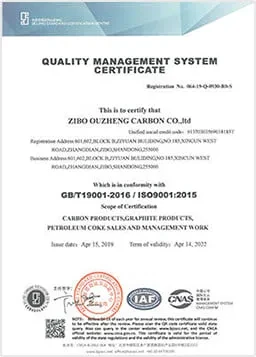
Our Certificate