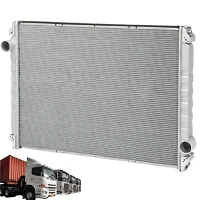
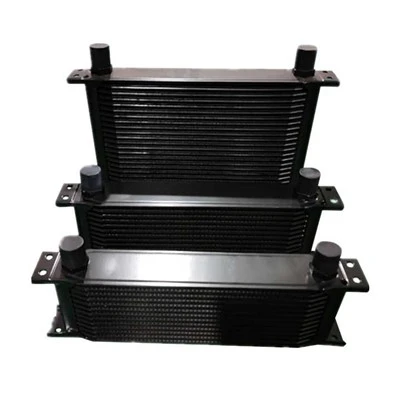
Aluminum Oil Cooler
Your Leading Yangzhou Zuoer Radiator Co., Ltd. Supplier
Yangzhou Zuoer Radiator Co., Ltd. is located in the Automobile lightweight Industrial Park of Yangzhou Economic Development Zone, Jiangsu Province, China. It is a professional enterprise specializing in the design and manufacture of automotive construction machinery, agricultural machinery, generator sets, air compressors and other heat dissipation systems, water radiators, oil radiators, intercoolers and new energy vehicle radiators.
Why Choose Us
High quality
The company has advanced quality assurance system ensures the continuous and stable product quality and meets the needs of all kinds of customers.
Rich experience
Our company has more than 20 years of production work experience.
Advanced equipment
The company has a first-class professional production line of aluminum radiator products, with all kinds of radiator products.
Technical support
The company has a mature and stable radiator product research and development team.


Real Factory

An oil cooler is a radiator-like component specifically designed to keep your oil cool. It consists of tubes and fins that allow for good airflow to pass through. Usually, they are placed where they can receive maximum airflow such as in front of or behind the radiator or fans.
Oil coolers attach to an adapter near the oil filter to ensure adequate pressure through the system. Oil is air cooled as it circulates through the cooler before it returns to the engine.
● Oil cooler cools the hot air at an exact temperature, as a result, the engines working enhances generally
● Oil coolers make sure the oil is cooled off properly before circulating it
● The oil temperature is controlled in the oil to the water cooler
● Installation of oil coolers is easy
● Oil coolers decrease the use of water cooling systems that can be corrosive to the engine
Oil circulation is controlled and efficient

Types of Aluminum Oil Cooler
Air cooled
Air-cooled oil coolers are commonly put in front of radiators or somewhere that allows plenty of fresh air to cycle over them. Similar to a normal radiator, the cool oil passes over the tubes as the air flows over the vanes. The heat is then drawn out of the oil, which effectively cools it.
Water cooled
Alternatively, water-cooled oil coolers rely on the engine’s coolant system to lower the oil temperature. One of the main benefits is that it allows the cooler to be mounted anywhere there is available space. The physical size of the cooler can also be reduced as there is no need for additional fins that draw out heat. It just needs to be plumbed to the vehicle’s cooling system.
Tube and fin coolers
Tube and fin coolers are the most common type of transmission coolers. They consist of a series of tubes through which the transmission fluid flows, surrounded by fins. The fins also dissipate heat and air passing through the cooler helps cool the fluid. However, if there is an excessive transmission fluid then your car might overheat.
Plate and fin coolers
Plate and fin coolers use plates and fins instead of tubes. Moreover, the transmission fluid flows through the narrow passages between the plates, maximising the exposure to heat-dissipating surfaces. These coolers are generally more efficient than tube and fin coolers.
Stacked plate coolers
Stacked plate coolers are considered the most efficient type. They consist of a series of stacked plates, creating a compact and highly effective cooling unit. The design also allows for a large surface area, facilitating superior heat dissipation.
Auxiliary coolers
Auxiliary coolers, also known as external coolers, are additional transmission coolers that can be added to the vehicle’s existing cooling system. They complement the built-in radiator coolers and are often used in vehicles subjected to heavy loads, towing, or extreme driving conditions.
Application of Aluminum Oil Cooler
High temperature climates – Geographical areas with high ambient temperatures offer less forgiveness to engine lubricants, as mechanical systems can’t dissipate their heat to the atmosphere as well as when outdoor temperatures are low.
High-load, low airflow conditions – Especially with enclosed power transmission and stationary systems, heat produced from high-load equipment that does not receive ample air flow needs additional means of dumping waste heat.
High RPM systems – Friction is especially problematic at high engine RPMs, making such applications perfect for oil coolers to help protect sensitive parts by keeping oil temperatures low.
Emergency and mission-critical equipment – When it comes to emergency response generators and engines, failure is not an option. This counts for first responder vehicles and backup infrastructure generators as well (such as those used for hospital ICU wards).
Frequent start/stop system – Certain vehicles and mechanical conveyance systems start and stop very frequently, and are under high load (generating high heat) during their short bursts of activity. In these systems, onboard cooling is usually not enough, as more heat has to be dumped in less time.
Rinse cooling – Certain industrial applications use lubricating oils to rinse over mechanical tooling, such as with CNC machining systems. Here, lubricants rinse away debris and particulates while also removing work-induced heat. Dealing with the rinse particulates can be challenging, but assuring a cool, consistent tool temperature is worth the effort.
Oil cooler take offs、oil thermostats、oil cooler ducts、oil cooler and fan brackets、oil cooler installation kits、oil cooler kits for automatic transmissions、oil temperature gauge adapters、water temperature gauge adapters、spin on oil filter conversions


The process of manufacturing an oil cooler which comprises the steps of:
Making cooling fins by forming a plurality of insertion holes of which inner brim is projected along the axial direction for inserting a plurality of tubes in each sheet to be transformed into cooling fins, and to drill a plurality of pores for inserting linear brazing materials at positions closed to the insertion holes, respectively.
Inserting a plurality of tubes arranged in parallel into each of insertion holes of a number of the cooling fins respectively, and inserting linear brazing materials into the pores of each of the cooling fins.
Joining the brims of the cooling fins and the tubes by heating to melt said brazing materials.
Drawdown filtration/separation
This is the mildest of the flushing strategies. Because many machines have no onboard filtration, the use of periodic filter carts and oil reclamation equipment not only can clean the oil (drawing down the contaminant level) but can also remove loosely deposited sludge and sediment from the shell.
High turbulence, high fluid velocity, low oil viscosity
Flushing is improved by enhanced fluid dynamics near machine surface boundaries. The approach involves increasing fluid velocity (sometimes two to four times the normal flow rates) and/or reducing oil viscosity during the flush. Typically, a Reynolds number in the range of 4,000 to 6,000 is generally targeted.
High flush-oil temperature
This strategy also reduces viscosity and increases turbulence. In addition, it increases oil solvency to aid in the scrubbing of tenacious deposits. Target temperatures range from 175 to 195 degrees F.
Cycling flush-oil temperature
Some practitioners have discovered that shocking the machine with large temperature shifts helps break loose crusty deposits during the flush. They use coolers and heaters to cycle the oil’s temperature repeatedly over a range greater than 100 degrees F.
Pulsating oil flow
Rapidly changing oil flow rates caused by pulsation have been found to help dislodge pesky contaminants from nooks and crannies of the shell and tubes.
Reverse oil flow
By changing fluid flow direction, some contaminants and surface deposits are exposed to bending fatigue reversals and can be dislodged and freed into the oil.
Wand flush tool
This tactic is used for larger shells with convenient access to hatches and clean-out ports. A wand on the end of a flushing hose is used to create high-velocity oil flow to blast away deposits. Alternatively, the wand used in suction mode can be effective at picking up bottom sediment on the sump floor.
Charged particle (electrostatic) separators
Some suppliers of these proprietary reclamation technologies have successfully removed varnish from machine surfaces as well as submicron soft contaminants in the oil, known to be a precursor to varnish and sludge.
Solvent/detergent flush
Various solvents and detergents have been used to concoct flush fluids with different degrees of success. These include mineral spirits (petroleum distillates), diesel fuel, motor oils and detergent/dispersant packages. They are typically added to the flush fluid at concentrations of 5 percent to 15 percent, followed by a rinse.
Compatibility problems (with the oil, seals and machine surfaces) are the primary concern. Always consult machine and lubricant suppliers before these chemicals are introduced.
Chemical cleaning
These are chemically active compounds, typically caustics and acids, that aid in the removal of the most adherent organic and inorganic surface deposits. The oil must first be removed completely from the system. Following the flush, these chemicals should be thoroughly rinsed from the system, often followed by pacification. Always consult machine and lubricant suppliers before employing chemical flushes.
Mechanical cleaning
This generally involves the use of scrapers, brushes, abrasives and sometimes an ultrasonic bath. Often, chemicals are also used as the machine components are washed one at a time using a parts-cleaning station.
Besides experience, an important part of defining the correct strategy and tactics comes from the inspection of the machine and contaminants. This inspection should be repeated before a machine is returned to service to verify that a successful flush has been achieved.
Likewise, a final oil sample should be taken and analyzed to confirm that residual flushing fluids or loosened deposits that could potentially compromise lubrication and system operation don’t remain in the new oil.
The ideal engine oil operating temperature is between 180 and 210 degrees Fahrenheit. If the oil gets too hot, it begins to break down, thinning and losing pressure, which could result in costly engine damage.
That’s where the oil cooler comes in. The heat dissipates after it moves out of the engine, through the oil cooler, and back into the vehicle’s oil pan in a constant, steady flow. Some oil coolers use a thermostat to close the oil cooler while the oil is quickly brought up to temperature. Then the cooler opens as needed to maintain proper oil temperature.

What Are the Signs of Oil Cooler Failure
The common oil cooler failure symptoms usually relate to leaking liquids. If the oil cooler adapter fails as mentioned above, engine oil may be forced out of the engine. If it is only a small oil cooler leak, it might be a puddle of engine oil on the ground underneath your vehicle or if it is larger it could quite possibly be a stream of oil on the ground behind your vehicle. If either of these is the case, you should get it checked out at a garage as soon as possible. As oil leaks, the engine loses ability to lubricate itself. This could result in increased engine temperature and premature parts wear due to increased friction from the lack of proper lubrication.
Another liquid that the cooling system can lose is engine coolant. Similar to a loss of oil, engine coolant can leak out of an oil cooler if the body of the cooler is compromised. Whether the coolant leak is large or small, the engine is going to overheat after a while if it isn’t repaired quickly. If the leak is small, you may notice coolant puddling on the ground underneath your vehicle. If the leak is a large one, you will probably notice steam pouring out from under the bonnet of your vehicle. If enough coolant leaks from the radiator or oil cooler, it can result in engine overheating problems and mechanical component failure, so get it checked out as soon as possible!
Mixing liquids can also be a sign of a problem with the oil cooler. If the oil cooler adapter fails internally (rather than externally, as mentioned above) you may notice engine oil in your cooling system. This happens because when the engine is running, oil pressure is greater than cooling system pressure. Oil is forced into the cooling system. This will eventually cause a lack of lubrication and can severely damage your engine. This can also happen in reverse and coolant can get into your oil supply. For both of these, the cooling system and the engine both need to have all the liquids flushed out. If your oil cooler adapter has failed, this will need to be replaced. The oil cooler itself will of course need to be replaced if there is a leak.
What Causes the Oil Cooler to Fail?
There are several causes behind an oil cooler failure, including:
Corrosion
Over time, the oil cooler can corrode due to exposure to moisture and other corrosive elements. This can cause the cooler to become weakened and eventually develop leaks.
01
Physical damage
The oil cooler is typically located in a vulnerable area of the engine, and it can be easily damaged by road debris, rocks, or other objects. Even a small dent or puncture can cause the oil cooler to leak oil.
02
Clogged or blocked passage
The oil cooler has small passages through which oil flows, and these passages can become clogged or blocked over time. This can restrict the flow of oil, causing the oil cooler to overheat and become damaged.
03
Poor maintenance
Like any other component of a vehicle, the oil cooler requires regular maintenance to ensure it stays in good working condition. If the oil cooler is not maintained properly, it can become damaged and fail prematurely.
04
Faulty installation
If the oil cooler is not installed correctly, it can become damaged due to vibrations or other issues. This is why it is important to have the oil cooler installed by a professional mechanic who is familiar with your vehicle’s make and model.
05
There are just two general rules when it comes to mounting the cooler. (Remember, "all other variables being equal.")
●Oil coolers require airflow to take heat away. More airflow is better.
●Cooling depends on the difference in temperature between the air and the oil. Cooler air cools better than warmer air.
●The airflow equation is a little complicated. As airflow velocity increases, the additional benefit decreases (the graph begins to flatten around 40 mph). The important takeaway is that your oil cooler needs to be exposed to airflow. The largest oil cooler will be ineffective if it's sealed in the trunk or mounted flat up against the firewall. Air must be able to get into the cooler, and it must be able to get out of the cooler. This is what carries away the heat.
●In many cars, this suggests mounting the cooler near the radiator. After all, Detroit / Stuttgart / Tokyo spent a lot of time and effort to locate the water radiator where it would get the best airflow. It seems like a no-brainer to follow their lead. But that leads to the second point above.
●Air temperature has a direct effect on oil cooler efficiency. Hot air does not cool as well as cool air. This is why we turn on the AC when we're hot, and not the heater. Mounting the oil cooler behind the radiator can reduce the efficiency of the cooler by as much as half. A better solution would be to mount the cooler in front of the radiator. The trade-off is that the efficiency of the radiator will be affected by the air coming through the cooler, but the effect should be much smaller because the cooler is typically smaller than the radiator. An even better option would be to mount the cooler next to the radiator (assuming there is room) or below the radiator (if it can be protected from damage).
●The air temperature difference also means that if we run two oil coolers, they should be plumbed in parallel, rather than in series. If you run two coolers in series, the oil in the second cooler would be cooler (closer to the air temperature) than the oil in the first cooler, making it much less efficient. Another bonus to plumbing in parallel is that it has the same effect as adding more rows to the cooler: Less flow restriction for an even happier oil system.
It is a professional enterprise specializing in the design and manufacture of automotive construction machinery, agricultural machinery, generator sets, air compressors and other heat dissipation systems, water radiators, oil radiators, intercoolers and new energy vehicle radiators.



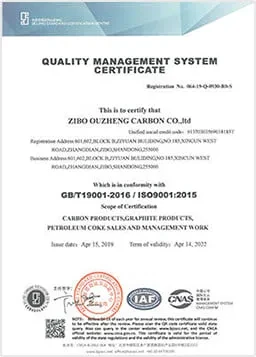
Our Certificate