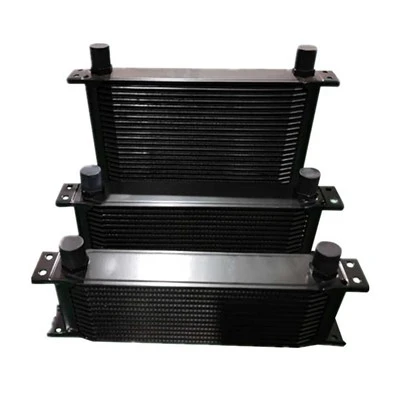
In the high - performance automotive and engine tuning realm, the intercooler plays a crucial role in ensuring the engine runs optimally. When it comes to choosing an intercooler, one common question that often arises is: Are all aluminum intercoolers more expensive than plastic intercoolers? As a supplier of all aluminum intercoolers, I will delve into this topic to provide you with a comprehensive analysis.
The Basics of Intercoolers
Before we can compare the costs, let's briefly understand what intercoolers do. An intercooler is a heat exchanger used to cool the compressed air coming from a turbocharger or a supercharger before it enters the engine. Cooler air is denser, which means more oxygen can be packed into each cylinder, resulting in a more efficient combustion process. This leads to increased power output and engine efficiency.
Advantages of Aluminum Intercoolers
Aluminum is the most popular material for high - performance intercoolers. There are several reasons for this. First, aluminum has excellent thermal conductivity. It can transfer heat away from the compressed air much more effectively than plastic. This allows the intercooler to cool the air to a lower temperature, increasing the air density and thus improving engine performance.


Second, aluminum is a strong and durable material. It can withstand high pressures and temperatures without deforming or cracking. This makes it ideal for high - performance engines that produce a lot of boost pressure. In addition, aluminum is corrosion - resistant, which means it will last longer under harsh operating conditions.
Advantages of Plastic Intercoolers
Plastic intercoolers also have their own advantages. One of the main benefits of plastic intercoolers is their lightweight nature. Plastic is much lighter than aluminum, which can be an advantage in applications where weight reduction is a priority, such as in some racing cars or fuel - efficient vehicles.
Plastic intercoolers are also generally easier and cheaper to manufacture. They can be molded into complex shapes, which allows for more flexibility in design. This can be useful in applications where space is limited, as the intercooler can be customized to fit into tight spaces more easily.
Cost Comparison
Now, let's address the question of cost. It is a common misconception that all aluminum intercoolers are more expensive than plastic intercoolers. While it is true that in many cases, aluminum intercoolers do carry a higher price tag, this is not always the case.
The cost of an intercooler depends on several factors, including the size, design, brand, and intended application. For basic, low - performance applications, plastic intercoolers may indeed be cheaper. These are often found in stock or entry - level vehicles where cost - effectiveness is a major consideration. The simple design and mass - production capabilities of plastic intercoolers keep their prices down.
However, when it comes to high - performance vehicles, the story is different. High - performance aluminum intercoolers are engineered to provide maximum cooling efficiency and durability. They often feature advanced fin designs, larger cores, and better end - tank configurations. These features are necessary to handle the high boost pressures and large volumes of compressed air produced by high - performance turbochargers or superchargers.
For instance, our All Aluminum Intercooler is designed with precision to meet the demands of high - performance engines. It undergoes strict quality control measures during the manufacturing process, which adds to the cost. But the performance benefits it offers in terms of increased power and engine efficiency far outweigh the initial investment.
In addition, the long - term cost of ownership should also be considered. Plastic intercoolers may be cheaper to purchase initially, but they may need to be replaced more frequently due to their lower durability. Aluminum intercoolers, on the other hand, can last the lifetime of the vehicle in many cases, providing a better return on investment over time.
Specific Applications and Cost
Let's look at some specific applications to further illustrate the cost differences. In a street - legal performance car, an upgrade from a stock plastic intercooler to an all - aluminum intercooler can significantly enhance the vehicle's performance. The cost of an all - aluminum intercooler for such an application may be higher, but the improved throttle response, increased horsepower, and better fuel efficiency make it worth the cost for enthusiasts.
In a racing environment, the demands on the intercooler are even more extreme. Racers need intercoolers that can perform consistently under high - stress conditions. Aluminum intercoolers are the obvious choice here, as they can handle the intense heat and pressure generated during a race. Although they are more expensive, reliability and performance are critical in racing, and the cost is justified by the need for top - notch equipment.
If you are looking for components to enhance your intercooler system, our 3 Inch Intercooler Piping Kit is a great addition. It is made of high - quality aluminum and is designed to work seamlessly with our Intercooler Aluminium.
Conclusion and Call to Action
In conclusion, while it is not always true that all aluminum intercoolers are more expensive than plastic intercoolers, they do tend to be pricier in high - performance applications. However, the performance, durability, and long - term cost - effectiveness of aluminum intercoolers make them a worthy investment for those who demand the best from their engines.
If you are interested in learning more about our all aluminum intercoolers or would like to discuss your specific needs, we invite you to get in touch for a purchase negotiation. Our team of experts is ready to provide you with detailed information and help you choose the right intercooler for your application.
References
- Smith, J. (2020). Automotive Intercooler Technology. Automotive Engineering Journal.
- Brown, A. (2019). The Role of Intercoolers in High - Performance Engines. Engineering Research Review.