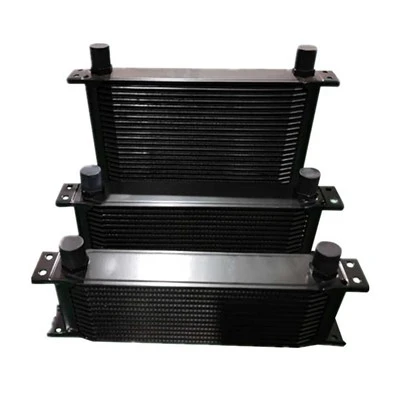
What is the pressure rating of an aluminum oil cooler?
Aluminum oil coolers are crucial components in many automotive, industrial, and marine applications. They play a vital role in maintaining optimal oil temperatures, which in turn helps extend the life of engines, transmissions, and other mechanical systems. One fundamental aspect to understand when dealing with aluminum oil coolers is their pressure rating.
Understanding Pressure Rating
The pressure rating of an aluminum oil cooler refers to the maximum amount of pressure that the cooler can withstand without failing. It is typically measured in pounds per square inch (psi) or bar. This rating is determined by several factors, including the design of the cooler, the thickness and quality of the aluminum used, and the manufacturing process.
A cooler with a higher pressure rating is generally more robust and suitable for applications where the oil pressure is relatively high. For example, high - performance engines or heavy - duty industrial equipment may require an oil cooler with a higher pressure rating to ensure reliable operation under extreme conditions.


Factors Affecting Pressure Rating
Design
The internal structure and layout of the aluminum oil cooler significantly impact its pressure - handling capabilities. For instance, a cooler with a multi - pass design may distribute the oil pressure more evenly across its tubes and fins, allowing it to handle higher pressures compared to a single - pass design. Additionally, the shape and size of the tubes and fins can affect how the oil flows through the cooler and how it withstands pressure.
Aluminum Quality
The quality of the aluminum used in the construction of the oil cooler is another critical factor. High - grade aluminum alloys are often more resistant to deformation and fatigue under pressure. These alloys have better mechanical properties, such as higher tensile strength and yield strength, which enable the cooler to maintain its integrity even when subjected to significant pressure fluctuations.
Manufacturing Process
The way the oil cooler is manufactured also plays a role in its pressure rating. Precision welding and brazing techniques are essential for creating strong joints between the tubes, fins, and end caps. A well - manufactured cooler will have consistent wall thicknesses and smooth internal surfaces, which help reduce the risk of pressure - induced failures, such as leaks or ruptures.
Importance of Knowing the Pressure Rating
As an aluminum oil cooler supplier, we understand the significance of providing accurate pressure ratings to our customers. Knowing the pressure rating of an oil cooler is essential for proper system design and installation. If the pressure rating of the cooler is too low for the application, it can lead to premature failure, which may result in costly repairs and downtime.
For example, in an automotive transmission system, if the oil cooler cannot handle the pressure generated by the transmission, the cooler may develop leaks, causing a loss of transmission fluid. This can lead to overheating of the transmission, accelerated wear of its components, and ultimately, transmission failure.
On the other hand, using an oil cooler with a much higher pressure rating than necessary may not be cost - effective. It may also add unnecessary weight and size to the system, which can be a drawback in applications where space and weight are limited, such as in racing cars or small aircraft.
Our Product Range and Pressure Ratings
We offer a wide range of aluminum oil coolers to meet the diverse needs of our customers. Each product in our catalog has a clearly specified pressure rating, allowing our customers to make informed decisions.
One of our popular products is the Aluminum 13 Row AN8/AN10 Automatic Engine Transmission Oil Cooler. This cooler is designed to handle relatively high oil pressures, making it suitable for use in both high - performance engines and heavy - duty automatic transmissions. It features a multi - row design, which helps distribute the oil pressure evenly and provides efficient cooling performance.
Another product in our lineup is the Finned Aluminum Transmission Oil Cooler. This cooler is known for its excellent heat dissipation capabilities as well as its ability to withstand a moderate range of oil pressures. The fins on this cooler increase the surface area available for heat transfer, while the robust aluminum construction ensures reliable performance under pressure.
In addition, we also offer the Aluminum Oil Catch Tank 2 Litre Coolant Overflow Reservoir Can. Although not strictly an oil cooler, it is an important component in many oil management systems. This catch tank is built to handle the pressure associated with the collection and storage of oil and coolant overflow, ensuring a safe and efficient operation of the overall system.
How to Select the Right Pressure Rating
When selecting an aluminum oil cooler for a specific application, it is important to consider the following steps:
- Determine the System Pressure
- Consult the equipment manufacturer's specifications to find out the maximum oil pressure that the system generates. This information can usually be found in the equipment's technical documentation or user manual.
- Factor in Pressure Fluctuations
- In addition to the maximum static pressure, it is also necessary to account for any pressure fluctuations that may occur during normal operation. For example, sudden acceleration or deceleration in a vehicle can cause transient pressure spikes in the oil system. It is advisable to choose an oil cooler with a pressure rating that can handle these fluctuations without compromising its performance or reliability.
- Consider the Application Environment
- The operating environment of the equipment can also affect the pressure requirements of the oil cooler. For instance, in a marine application, the cooler needs to be able to withstand the additional pressure caused by water immersion and the movement of the vessel. In high - altitude or extreme temperature environments, the pressure inside the oil system may also vary, and these factors should be taken into account when selecting the cooler.
Conclusion
The pressure rating of an aluminum oil cooler is a critical parameter that determines its suitability for a particular application. As a leading aluminum oil cooler supplier, we are committed to providing high - quality products with accurate pressure ratings to ensure the reliable performance of our customers' systems.
If you are in the market for an aluminum oil cooler, we invite you to explore our product range and find the perfect solution for your needs. Our team of experts is always ready to assist you with any questions or technical inquiries you may have. Contact us today to start discussing your procurement requirements and let us help you find the most suitable aluminum oil cooler for your application.
References
- Automotive Cooling System Design Manual, Society of Automotive Engineers
- Handbook of Aluminum Alloys and Their Applications, American Aluminum Association