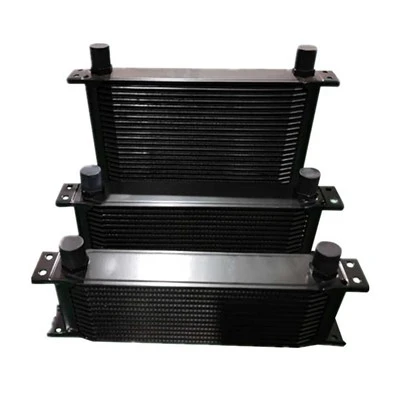
Racing is a high - octane sport where every component of a race car plays a crucial role in performance and safety. One such vital component is the radiator, which is responsible for keeping the engine cool under extreme conditions. As an aluminum race radiator supplier, I often get asked the question: Can an aluminum race radiator withstand vibrations during racing? In this blog, I'll dive deep into this topic, exploring the science behind it and sharing insights from my experience in the industry.
The Nature of Vibrations in Racing
Racing is a world of intense vibrations. From the moment a race car's engine roars to life, it generates a symphony of mechanical vibrations. The engine's pistons move up and down at high speeds, the wheels hit bumps on the track, and the car maneuvers through sharp turns. All these actions contribute to a complex set of vibrations that can range from low - frequency oscillations to high - frequency jolts.
These vibrations can have a significant impact on the various components of a race car. For a radiator, they pose a unique set of challenges. Over time, continuous vibrations can lead to wear and tear, potentially causing leaks, cracks, or other forms of damage. This is why it's essential to understand whether an aluminum race radiator can withstand these harsh conditions.
Why Aluminum for Racing Radiators?
Before delving into the radiator's ability to handle vibrations, let's first understand why aluminum is a popular choice for racing radiators. Aluminum is a lightweight metal with excellent thermal conductivity. In racing, weight is a critical factor as it directly affects the car's acceleration, handling, and fuel efficiency. A lighter radiator means less overall weight for the car, allowing it to perform better on the track.
In addition to its lightweight nature, aluminum has good corrosion resistance. Racing environments can be harsh, with exposure to various chemicals and moisture. Aluminum's ability to resist corrosion helps ensure the radiator's longevity and reliability.
Design Features that Help Aluminum Race Radiators Withstand Vibrations
Robust Core Design
The core of an aluminum race radiator is where the heat exchange takes place. A well - designed core is essential for withstanding vibrations. Most high - quality aluminum race radiators feature a multi - row core design. Multiple rows of tubes and fins provide additional structural support, making the radiator more rigid and less prone to damage from vibrations.
For example, our Aluminum Race Radiator is engineered with a precision - crafted multi - row core. The tubes are made of high - grade aluminum, which is strong enough to endure the constant shaking and jolting during a race.
Reinforced Mounting Points
Another crucial aspect of a radiator's ability to handle vibrations is its mounting system. Aluminum race radiators are typically equipped with reinforced mounting points. These points are designed to securely attach the radiator to the car's chassis, minimizing movement and reducing the stress caused by vibrations.
We use advanced manufacturing techniques to create mounting brackets that are both strong and lightweight. These brackets are carefully engineered to distribute the forces evenly across the radiator, preventing any concentrated stress points that could lead to damage.
High - Quality Brazing
Brazing is the process of joining the various components of the radiator together. In an aluminum race radiator, high - quality brazing is essential for maintaining structural integrity under vibrations. A strong braze joint ensures that the tubes, fins, and headers remain firmly connected, even when subjected to intense shaking.
Our radiators undergo a state - of - the - art brazing process that creates a durable bond between the components. This not only enhances the radiator's ability to withstand vibrations but also improves its overall heat - transfer efficiency.
Real - World Testing and Performance
To ensure that our aluminum race radiators can handle the rigors of racing, we conduct extensive real - world testing. We partner with professional racing teams to install our radiators in their cars and monitor their performance over multiple races.
During these tests, we collect data on various parameters, including temperature, pressure, and vibration levels. Our radiators have consistently proven their ability to withstand the high - intensity vibrations of racing. In fact, many of our customers have reported that our radiators have performed flawlessly even in the most demanding racing conditions.
Comparing Different Brands of Aluminum Racing Radiators
There are several brands of aluminum racing radiators available in the market, each with its own unique features and capabilities. Two popular brands are Afco Aluminum Racing Radiator and Koyo Aluminum Racing Radiator.
Afco radiators are known for their high - performance design and durability. They are often used in professional racing series and have a reputation for withstanding extreme conditions. Koyo radiators, on the other hand, are recognized for their precision engineering and advanced cooling technology.
While both brands offer excellent products, our aluminum race radiators combine the best of both worlds. We focus on continuous innovation, using the latest materials and manufacturing techniques to create radiators that are not only strong and reliable but also highly efficient.
Conclusion and Call to Action
In conclusion, an aluminum race radiator can indeed withstand vibrations during racing, thanks to its robust design features and high - quality construction. As a supplier, we are committed to providing our customers with the best - in - class aluminum race radiators that can perform under the most challenging conditions.
If you're a racing team or an automotive enthusiast looking for a reliable aluminum race radiator, we'd love to hear from you. Our team of experts can help you choose the right radiator for your specific needs. Whether you're competing in a local race or a professional championship, our radiators will ensure that your engine stays cool and your car performs at its best.


References
- Automotive Radiator Handbook, SAE International
- "Thermal Management in Racing Vehicles", Journal of Automotive Engineering
- Industry reports on racing radiator technology and performance