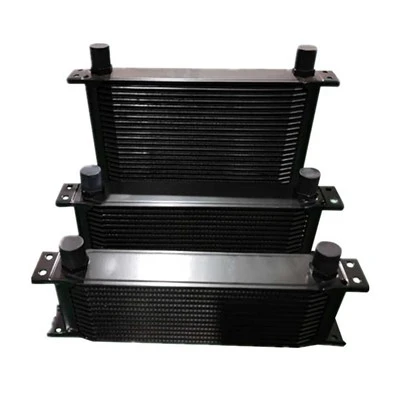
As a supplier of racing aluminum radiators, I often encounter questions from customers regarding the compatibility of our products with various coolant additives. This is a crucial topic as the right combination can significantly enhance the performance and longevity of both the radiator and the engine. In this blog, I will delve into the science behind racing aluminum radiators and their compatibility with different coolant additives.
Understanding Racing Aluminum Radiators
Racing aluminum radiators are designed to meet the high - performance demands of racing engines. Aluminum is the material of choice due to its excellent heat - transfer properties, lightweight nature, and corrosion resistance. These radiators are engineered to dissipate heat more efficiently than traditional radiators, ensuring that the engine operates at an optimal temperature even under extreme conditions.
There are different types of racing aluminum radiators available in the market. For instance, the Koyo Aluminum Racing Radiator is known for its precision engineering and high - quality construction. It is designed to provide maximum cooling efficiency in high - performance racing applications. Another popular option is the Griffin Aluminum Racing Radiator, which offers a combination of durability and excellent heat transfer capabilities. The Double Pass Aluminum Radiator is also a great choice, as it provides an additional pass for the coolant, increasing the cooling capacity.


Coolant Additives: Types and Functions
Coolant additives are chemicals that are added to the coolant to enhance its performance. There are several types of coolant additives, each with its own specific function:
- Corrosion Inhibitors: These additives protect the radiator and other cooling system components from corrosion. Aluminum is relatively resistant to corrosion, but in the presence of certain chemicals and contaminants in the coolant, it can still be prone to corrosion over time. Corrosion inhibitors form a protective layer on the metal surfaces, preventing the formation of rust and other corrosive products.
- Antifreeze/Coolants: These additives lower the freezing point of the coolant and raise its boiling point. This is essential in racing applications, where the engine can generate a significant amount of heat, and the coolant needs to be able to withstand high temperatures without boiling. Antifreeze/coolants also provide some level of corrosion protection.
- Lubricants: Some coolant additives contain lubricants that help to reduce friction within the water pump and other moving parts of the cooling system. This can improve the efficiency of the cooling system and extend the life of the components.
- Scale and Deposit Inhibitors: These additives prevent the formation of scale and deposits in the radiator and the cooling system. Scale and deposits can reduce the heat - transfer efficiency of the radiator and can also clog the coolant passages, leading to overheating.
Compatibility of Racing Aluminum Radiators with Coolant Additives
The compatibility of racing aluminum radiators with coolant additives depends on several factors:
- Chemical Composition: Different coolant additives have different chemical compositions. Some additives may contain chemicals that can react with aluminum, causing corrosion or other damage. For example, additives that contain high levels of silicates or phosphates can react with aluminum under certain conditions. It is important to choose coolant additives that are specifically formulated for use with aluminum radiators.
- pH Level: The pH level of the coolant is also an important factor. Aluminum is most resistant to corrosion in a slightly acidic to neutral pH range. Coolant additives that have a high or low pH can cause the aluminum to corrode. Most modern coolant additives are formulated to maintain a pH level that is compatible with aluminum.
- Manufacturer's Recommendations: The manufacturer of the racing aluminum radiator usually provides recommendations regarding the type of coolant and coolant additives that are suitable for use with their product. It is important to follow these recommendations to ensure the proper functioning and longevity of the radiator.
In general, most racing aluminum radiators are compatible with coolant additives that are labeled as "aluminum - safe" or "for use with aluminum radiators". These additives are formulated to be gentle on aluminum and to provide the necessary protection and performance enhancement.
Testing and Verification
To ensure the compatibility of coolant additives with racing aluminum radiators, it is advisable to conduct some testing. One way to do this is to perform a small - scale test in a laboratory setting. A sample of the radiator material can be immersed in a solution containing the coolant additive, and the solution can be monitored for any signs of corrosion or other chemical reactions over a period of time.
Another option is to rely on the results of independent testing and research. There are several organizations and laboratories that conduct tests on coolant additives and their compatibility with different radiator materials. By referring to these test results, you can make an informed decision about which coolant additives to use.
Case Studies
Let's look at some real - world case studies to illustrate the importance of coolant additive compatibility with racing aluminum radiators:
Case Study 1: A racing team was using a racing aluminum radiator in their high - performance race car. They initially used a coolant additive that was not specifically formulated for aluminum radiators. After a few races, they noticed that the radiator was starting to show signs of corrosion, and the cooling efficiency was decreasing. They switched to a coolant additive that was labeled as "aluminum - safe", and the problem was resolved. The radiator continued to function properly, and the cooling performance improved.
Case Study 2: Another racing team was experiencing overheating issues with their race car. After investigating, they found that the coolant passages in the radiator were clogged with scale and deposits. They had been using a coolant additive that did not contain effective scale and deposit inhibitors. They switched to a coolant additive that was specifically designed to prevent scale and deposits, and the overheating problem was solved.
Conclusion
In conclusion, the compatibility of racing aluminum radiators with coolant additives is a critical factor in ensuring the optimal performance and longevity of the cooling system. It is important to choose coolant additives that are specifically formulated for use with aluminum radiators and to follow the manufacturer's recommendations. By doing so, you can protect your racing aluminum radiator from corrosion, improve its cooling efficiency, and avoid costly repairs and downtime.
If you are in the market for a racing aluminum radiator or have questions about coolant additives and their compatibility, we are here to help. Our team of experts can provide you with the information and guidance you need to make the right choice for your racing application. Contact us today to start a discussion about your procurement needs and to explore how our products can meet your requirements.
References
- "Automotive Cooling System Handbook" by Jack Erjavec
- "Cooling System Design and Optimization" by SAE International
- Technical bulletins from racing aluminum radiator manufacturers