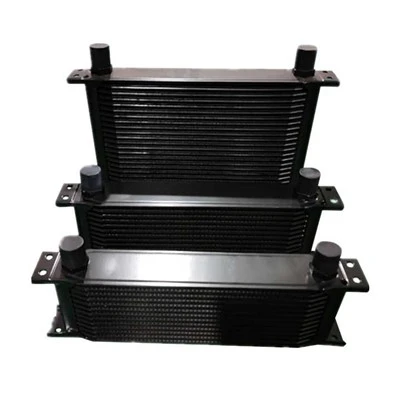
As a supplier of aluminum condensers, I often encounter inquiries from customers about various technical aspects of our products. One question that comes up frequently is: What is the wind resistance of an aluminum condenser? In this blog post, I'll delve into this topic, explaining what wind resistance means for aluminum condensers, the factors that influence it, and how it impacts the performance of these essential components.
Understanding Wind Resistance in Aluminum Condensers
Wind resistance, in the context of an aluminum condenser, refers to the ability of the condenser to withstand the forces exerted by wind without significant damage or loss of performance. When air flows over the surface of a condenser, it creates a pressure difference that can cause mechanical stress on the condenser's structure. This stress can lead to issues such as vibration, deformation, or even damage to the fins and tubes of the condenser, which are crucial for heat transfer.
The wind resistance of an aluminum condenser is typically measured in terms of the maximum wind speed that the condenser can tolerate without experiencing a significant reduction in its efficiency or structural integrity. This value is important for several reasons. First, it helps engineers and designers determine the appropriate installation location for the condenser. For example, if a condenser is to be installed in an area with high wind speeds, such as on the rooftop of a building or in a coastal region, a condenser with high wind resistance will be required. Second, understanding wind resistance can help in the maintenance and operation of the condenser. By knowing the limits of the condenser's wind resistance, operators can take appropriate measures to protect the condenser during high - wind events.
Factors Affecting the Wind Resistance of Aluminum Condensers
1. Design and Structure
The design and structure of an aluminum condenser play a crucial role in determining its wind resistance. Condensers with a more robust and aerodynamic design are generally more resistant to wind forces. For instance, condensers with a streamlined shape can reduce the drag force exerted by the wind, minimizing the stress on the structure. Additionally, the arrangement of the fins and tubes in the condenser can also affect its wind resistance. A well - designed fin and tube configuration can help to distribute the wind load evenly across the condenser, reducing the risk of localized stress and damage.


2. Material Quality
The quality of the aluminum used in the condenser is another important factor. High - quality aluminum alloys have better mechanical properties, such as higher strength and stiffness, which can enhance the condenser's ability to withstand wind forces. For example, some advanced aluminum alloys used in modern condensers have been specifically developed to provide superior corrosion resistance and mechanical strength, making them more suitable for harsh environmental conditions, including high - wind areas.
3. Mounting and Installation
The way the condenser is mounted and installed can significantly impact its wind resistance. A proper mounting system that securely attaches the condenser to its support structure is essential. For example, using vibration - dampening mounts can help to reduce the transfer of wind - induced vibrations from the condenser to the surrounding structure, preventing damage to both the condenser and the mounting system. Moreover, the orientation of the condenser during installation can also affect its wind resistance. Installing the condenser in a direction that is parallel to the prevailing wind direction can reduce the wind load on the condenser.
Measuring the Wind Resistance of Aluminum Condensers
There are several methods for measuring the wind resistance of aluminum condensers. One common approach is through wind tunnel testing. In a wind tunnel, the condenser is placed in a controlled environment where the wind speed and direction can be precisely regulated. Sensors are then used to measure the forces acting on the condenser, such as the drag force and the lift force. By analyzing the data collected from these sensors, engineers can determine the maximum wind speed that the condenser can withstand before experiencing significant performance degradation or structural damage.
Another method is through computational fluid dynamics (CFD) simulations. CFD simulations use numerical algorithms to model the flow of air around the condenser. This allows engineers to predict the wind forces acting on the condenser under different wind conditions without the need for physical testing. CFD simulations can provide detailed information about the distribution of pressure and velocity around the condenser, helping to optimize the design for better wind resistance.
Impact of Wind Resistance on Condenser Performance
The wind resistance of an aluminum condenser has a direct impact on its performance. When a condenser is exposed to wind speeds beyond its design limits, several problems can occur. Firstly, excessive wind forces can cause the fins of the condenser to bend or deform. Since the fins are responsible for increasing the surface area for heat transfer, any damage to the fins can reduce the condenser's heat transfer efficiency. This, in turn, can lead to higher operating temperatures and increased energy consumption.
Secondly, wind - induced vibrations can cause fatigue damage to the tubes and joints in the condenser. Over time, this can lead to leaks in the refrigerant system, which not only reduces the performance of the condenser but can also pose environmental and safety risks. Therefore, ensuring that the condenser has adequate wind resistance is crucial for maintaining its long - term performance and reliability.
Our Aluminum Condenser Products and Wind Resistance
At our company, we take wind resistance seriously when designing and manufacturing our aluminum condensers. We offer a range of products, including Aluminum Bar Plate Heat Exchanger, Aluminum Condenser Coil, and Aluminum Ac Condenser. All of our products are designed with high - quality aluminum alloys and advanced manufacturing techniques to ensure optimal wind resistance.
Our engineering team conducts extensive research and development to improve the design and structure of our condensers. We use CFD simulations and wind tunnel testing to optimize the aerodynamics of our condensers, reducing drag and improving wind resistance. Additionally, we offer customized solutions to meet the specific wind - resistance requirements of our customers. Whether you need a condenser for a high - wind industrial application or a residential air - conditioning system, we can provide a product that meets your needs.
Conclusion and Call to Action
In conclusion, understanding the wind resistance of an aluminum condenser is essential for ensuring its proper installation, operation, and long - term performance. As a leading supplier of aluminum condensers, we are committed to providing our customers with high - quality products that offer excellent wind resistance. Our team of experts is always ready to assist you in selecting the right condenser for your specific application.
If you are interested in our aluminum condenser products and would like to discuss your requirements further, please feel free to contact us. We look forward to the opportunity to work with you and provide you with the best solutions for your heat - exchange needs.
References
- Incropera, F. P., & DeWitt, D. P. (2002). Fundamentals of Heat and Mass Transfer. John Wiley & Sons.
- Kays, W. M., & London, A. L. (1984). Compact Heat Exchangers. McGraw - Hill.
- ASHRAE Handbook of Fundamentals. American Society of Heating, Refrigerating and Air - Conditioning Engineers.