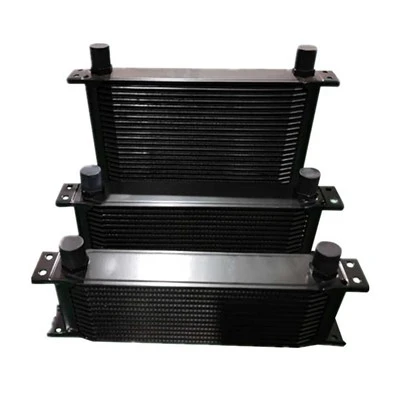
The header tank, also known as the coolant reservoir or expansion tank, plays a crucial role in an aluminum racing radiator. As a trusted aluminum racing radiator supplier, I've witnessed firsthand how the proper functioning of the header tank can significantly impact the performance and longevity of a racing vehicle's cooling system. In this blog post, I'll delve into the various functions of the header tank and explain why it's an essential component of any high - performance aluminum racing radiator.
1. Coolant Storage and Expansion
One of the primary functions of the header tank is to store excess coolant. When the engine is running, the coolant heats up and expands. Without a place to accommodate this expansion, the pressure within the cooling system would increase to dangerous levels, potentially leading to leaks, blown gaskets, or even radiator failure. The header tank provides a safe space for the expanded coolant to flow into.
As the engine cools down, the coolant contracts, and the header tank releases the stored coolant back into the radiator to maintain the proper coolant level in the system. This continuous cycle of expansion and contraction is normal and necessary for the efficient operation of the cooling system. For example, in a high - performance race car, where the engine can reach extremely high temperatures during a race, the header tank ensures that there is always an adequate supply of coolant available to keep the engine cool.


2. Air Separation
Another important role of the header tank is to separate air from the coolant. Air can enter the cooling system during filling, maintenance, or as a result of a leak. Air pockets in the coolant can reduce the efficiency of the cooling system because air is a poor conductor of heat compared to coolant. When the coolant flows through the header tank, the air rises to the top and can be vented out through a small opening or a pressure cap.
This air separation process helps to prevent overheating and cavitation. Cavitation occurs when air bubbles form in the coolant due to low pressure areas within the system. These bubbles can collapse under high pressure, causing damage to the radiator tubes and water pump impellers. By removing air from the coolant, the header tank helps to maintain the integrity of the cooling system and ensures that the coolant can effectively transfer heat away from the engine.
3. Coolant Level Monitoring
The header tank also serves as a visual indicator of the coolant level in the system. Most header tanks are made of transparent or semi - transparent plastic, allowing the driver or mechanic to easily check the coolant level. Maintaining the proper coolant level is crucial for the proper functioning of the cooling system. If the coolant level is too low, there may not be enough coolant to absorb and transfer heat away from the engine, leading to overheating.
On the other hand, if the coolant level is too high, it can cause the coolant to overflow during expansion, leading to a loss of coolant and potential damage to the engine. Regularly checking the coolant level in the header tank can help to identify potential problems early, such as a leak in the system or excessive coolant consumption.
4. Pressure Regulation
The pressure cap on the header tank plays a vital role in regulating the pressure within the cooling system. The pressure cap is designed to maintain a specific pressure within the system, typically around 13 - 16 psi (pounds per square inch) in most racing applications. By increasing the pressure in the cooling system, the boiling point of the coolant is raised.
For example, at normal atmospheric pressure, water boils at 100°C (212°F). However, when the pressure in the cooling system is increased to 15 psi, the boiling point of the coolant can be raised to around 120°C (248°F). This higher boiling point allows the coolant to absorb more heat from the engine without boiling, which is essential for high - performance racing engines that generate a large amount of heat.
5. Compatibility with Different Radiator Designs
Header tanks are designed to be compatible with various types of aluminum racing radiators, such as the Afco Aluminum Racing Radiator, Double Pass Aluminum Radiator, and Summit Racing Aluminum Radiator. Different radiator designs may have different flow patterns and requirements, but the header tank can be customized to work effectively with each design.
For instance, a double - pass radiator has a different coolant flow path compared to a single - pass radiator. The header tank can be designed to ensure that the coolant is properly distributed and circulated through the radiator, regardless of the design. This flexibility makes the header tank an integral part of any high - performance aluminum racing radiator system.
6. Impact on Racing Performance
In the world of racing, every component of the vehicle can have a significant impact on performance. A well - designed header tank can contribute to the overall performance of a race car by ensuring that the engine stays cool. A cool engine operates more efficiently, with better power output and fuel economy.
For example, if the cooling system overheats during a race, the engine may experience a loss of power due to detonation or pre - ignition. This can result in slower lap times and a competitive disadvantage. By maintaining the proper coolant temperature, the header tank helps to keep the engine running at its optimal performance level, giving the driver a better chance of winning the race.
Conclusion
In conclusion, the header tank is a vital component of an aluminum racing radiator. Its functions, including coolant storage and expansion, air separation, coolant level monitoring, pressure regulation, compatibility with different radiator designs, and impact on racing performance, make it an essential part of any high - performance cooling system.
If you're in the market for a high - quality aluminum racing radiator or need more information about header tanks and their role in the cooling system, don't hesitate to reach out. We are committed to providing top - notch products and expert advice to help you get the most out of your racing vehicle. Contact us today to start a discussion about your specific needs and how we can assist you in achieving optimal cooling performance.
References
- "Automotive Cooling Systems: Principles and Practice" by John Heywood
- "High - Performance Engine Cooling" by Howell Racing Enterprises