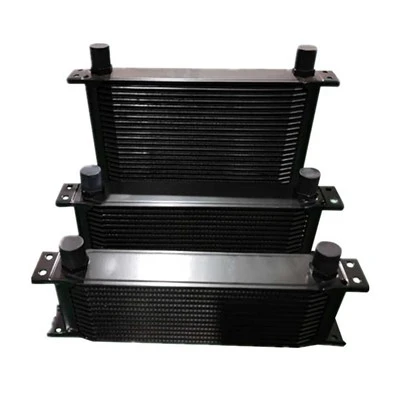
As a supplier of Chevelle aluminum radiators, I've had the privilege of delving deep into the intricacies of radiator design. One of the most crucial aspects that often goes unnoticed but plays a vital role in a radiator's performance is the fin design. In this blog, I'll explore what the fin design of a Chevelle aluminum radiator entails and why it matters.
The Basics of Fins in a Radiator
Fins are an integral part of any radiator, including those for Chevelles. Their primary function is to increase the surface area of the radiator, which in turn enhances the heat transfer process. When the hot coolant flows through the radiator tubes, the fins absorb the heat and dissipate it into the surrounding air. The more surface area the fins provide, the more efficiently the radiator can cool the coolant.
Types of Fin Designs in Chevelle Aluminum Radiators
There are several types of fin designs commonly used in Chevelle aluminum radiators, each with its own advantages and disadvantages.


Straight Fins
Straight fins are the simplest and most traditional fin design. They consist of a series of parallel fins that run along the length of the radiator tubes. Straight fins are easy to manufacture and provide a relatively large surface area for heat transfer. However, they can be less effective at promoting air flow compared to other fin designs. This is because the straight fins can create a more laminar flow of air, which reduces the amount of turbulence and can limit the heat transfer efficiency.
Louvered Fins
Louvered fins are a more advanced fin design that features small, angled cuts or louvers in the fins. These louvers disrupt the air flow and create turbulence, which helps to increase the heat transfer efficiency. Louvered fins are more effective at promoting air flow than straight fins, especially at higher air speeds. They also provide a larger surface area for heat transfer due to the additional surface area created by the louvers. However, louvered fins can be more difficult to manufacture and may be more prone to clogging with dirt and debris.
Wave Fins
Wave fins, also known as serpentine fins, have a wavy or serpentine shape. This design increases the surface area of the fins and promotes turbulence in the air flow, which enhances the heat transfer efficiency. Wave fins are particularly effective at low air speeds, where they can create a more turbulent flow of air and improve the heat transfer performance. They are also less prone to clogging than louvered fins because the wavy shape helps to prevent dirt and debris from accumulating on the fins. However, wave fins can be more expensive to manufacture than straight or louvered fins.
Factors Affecting Fin Design
Several factors influence the choice of fin design for a Chevelle aluminum radiator. These include:
Air Flow Requirements
The air flow requirements of the radiator are a critical factor in determining the fin design. If the radiator is installed in a vehicle with a high-performance engine or in a hot climate, it will require a fin design that can promote efficient air flow and heat transfer. Louvered or wave fins may be more suitable in these applications because they can create more turbulence in the air flow and improve the heat transfer efficiency. On the other hand, if the radiator is installed in a vehicle with a standard engine or in a cooler climate, straight fins may be sufficient.
Cooling Capacity
The cooling capacity of the radiator is another important consideration. A radiator with a higher cooling capacity will require a fin design that can provide a larger surface area for heat transfer. Louvered or wave fins are typically better suited for high-capacity radiators because they can provide more surface area than straight fins. However, the choice of fin design will also depend on the size and configuration of the radiator tubes.
Manufacturing Constraints
Manufacturing constraints can also influence the choice of fin design. Some fin designs, such as louvered or wave fins, may be more difficult to manufacture than straight fins. This can increase the cost of production and may limit the availability of certain fin designs. Additionally, the manufacturing process may affect the quality and durability of the fins. For example, if the fins are not properly bonded to the radiator tubes, they may become loose or detached over time, which can reduce the heat transfer efficiency.
Importance of Fin Design in Chevelle Aluminum Radiators
The fin design of a Chevelle aluminum radiator is crucial for several reasons.
Heat Transfer Efficiency
The primary function of a radiator is to transfer heat from the coolant to the surrounding air. The fin design plays a significant role in determining the heat transfer efficiency of the radiator. A well-designed fin can increase the surface area of the radiator and promote turbulence in the air flow, which enhances the heat transfer performance. This means that the radiator can cool the coolant more effectively, which is essential for maintaining the engine's optimal operating temperature.
Engine Performance
A properly functioning radiator is essential for maintaining the engine's performance. If the radiator is not able to cool the coolant effectively, the engine may overheat, which can lead to a variety of problems, including reduced power, increased fuel consumption, and potential engine damage. By choosing a radiator with an appropriate fin design, you can ensure that the engine stays cool and performs at its best.
Durability
The fin design can also affect the durability of the radiator. Fins that are prone to clogging or damage can reduce the lifespan of the radiator. For example, if the fins are clogged with dirt and debris, the air flow through the radiator will be restricted, which can reduce the heat transfer efficiency and cause the radiator to overheat. Additionally, fins that are not properly bonded to the radiator tubes may become loose or detached over time, which can lead to leaks and other problems. By choosing a radiator with a durable fin design, you can ensure that the radiator lasts longer and requires less maintenance.
Conclusion
The fin design of a Chevelle aluminum radiator is a critical factor in determining its performance and durability. By understanding the different types of fin designs and the factors that affect their performance, you can choose a radiator that is best suited for your specific needs. Whether you need a radiator for a high-performance engine or a standard vehicle, there is a fin design that can provide the optimal balance of heat transfer efficiency, air flow, and durability.
If you're in the market for a Chevelle aluminum radiator or any other type of radiator, such as a 1934 Ford Aluminum Radiator, 1978 Ford F150 Aluminum Radiator, or Fox Body Aluminum Radiator, I encourage you to contact us to discuss your requirements. We have a wide range of radiator options available, and our team of experts can help you choose the right radiator for your vehicle. Don't hesitate to reach out to us for more information and to start the procurement process.
References
- Incropera, F. P., & DeWitt, D. P. (2002). Fundamentals of Heat and Mass Transfer. John Wiley & Sons.
- Kreith, F., & Bohn, M. S. (2001). Principles of Heat Transfer. Cengage Learning.
- Rohsenow, W. M., Hartnett, J. P., & Cho, Y. I. (1998). Handbook of Heat Transfer. McGraw-Hill.