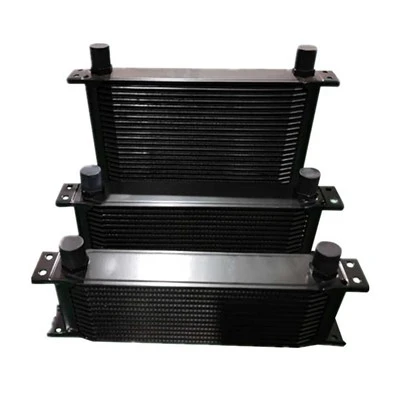
For automotive enthusiasts and professionals alike, understanding the cooling efficiency of an aluminum intercooler core is crucial. As a leading aluminum intercooler core supplier, we are dedicated to providing high - quality products and in - depth knowledge about their performance. In this blog, we will explore the factors that influence the cooling efficiency of aluminum intercooler cores and how our products stand out in the market.
What is an Aluminum Intercooler Core?
An intercooler is a device used in turbocharged and supercharged engines to cool the compressed air before it enters the engine's intake manifold. The core is the heart of the intercooler, where the heat exchange process takes place. Aluminum is the preferred material for intercooler cores due to its excellent thermal conductivity, lightweight nature, and corrosion resistance.
Aluminum has a high thermal conductivity coefficient, which means it can transfer heat quickly from the hot compressed air to the cooler ambient air. This property allows the intercooler to effectively reduce the temperature of the intake air, increasing its density and thus improving the engine's performance. Additionally, aluminum is relatively lightweight compared to other metals, which helps to reduce the overall weight of the vehicle and improve fuel efficiency.
Factors Affecting Cooling Efficiency
Core Design
The design of the aluminum intercooler core plays a significant role in its cooling efficiency. There are two main types of core designs: bar - and - plate and tube - and - fin.
- Bar - and - Plate: This design consists of a series of bars and plates that create a large surface area for heat transfer. The bars are used to separate the air passages, while the plates provide the contact surface for heat exchange. Bar - and - plate intercooler cores are known for their high strength and durability, as well as their ability to handle high pressure. They are commonly used in high - performance applications where reliability is crucial.
- Tube - and - Fin: Tube - and - fin intercooler cores feature a series of tubes through which the compressed air flows, surrounded by fins. The fins increase the surface area available for heat transfer, allowing for more efficient cooling. Tube - and - fin designs are generally more lightweight and cost - effective than bar - and - plate designs, making them a popular choice for a wide range of applications.
Core Size
The size of the intercooler core also affects its cooling efficiency. A larger core generally has a greater surface area for heat transfer, which allows it to cool the compressed air more effectively. However, a larger core may also increase the pressure drop across the intercooler, which can reduce the engine's performance. Therefore, it is important to find the right balance between core size and pressure drop.
Airflow
Proper airflow is essential for the efficient operation of an intercooler. The intercooler needs to be positioned in a location where it can receive a sufficient amount of cool air. This can be achieved by installing the intercooler in front of the radiator or in another area with good airflow. Additionally, the design of the intercooler piping can also affect the airflow. Smooth, straight pipes with minimal bends and restrictions will allow for better airflow and more efficient cooling.
Fin Density and Design
The density and design of the fins on the intercooler core can have a significant impact on its cooling efficiency. Fins with a higher density will provide a larger surface area for heat transfer, but they may also increase the pressure drop across the intercooler. Therefore, it is important to optimize the fin density to achieve the best balance between cooling efficiency and pressure drop.
In addition to fin density, the shape of the fins can also affect cooling efficiency. Different fin shapes, such as louvered, wavy, or pin fins, have different heat transfer characteristics. For example, louvered fins can disrupt the boundary layer of air flowing over the fin surface, increasing the heat transfer coefficient.
Measuring Cooling Efficiency
The cooling efficiency of an aluminum intercooler core is typically measured by the temperature drop of the compressed air as it passes through the intercooler. A higher temperature drop indicates a more efficient intercooler. The efficiency can be calculated using the following formula:
[ \text{Cooling Efficiency} (%)=\frac{T_{in}-T_{out}}{T_{in}-T_{ambient}}\times100% ]
Where (T_{in}) is the temperature of the compressed air entering the intercooler, (T_{out}) is the temperature of the compressed air leaving the intercooler, and (T_{ambient}) is the ambient air temperature.
Our Aluminum Intercooler Cores
As a trusted aluminum intercooler core supplier, we offer a wide range of products designed to meet the diverse needs of our customers. Our intercooler cores are manufactured using high - quality aluminum materials and advanced manufacturing processes to ensure optimal performance and reliability.
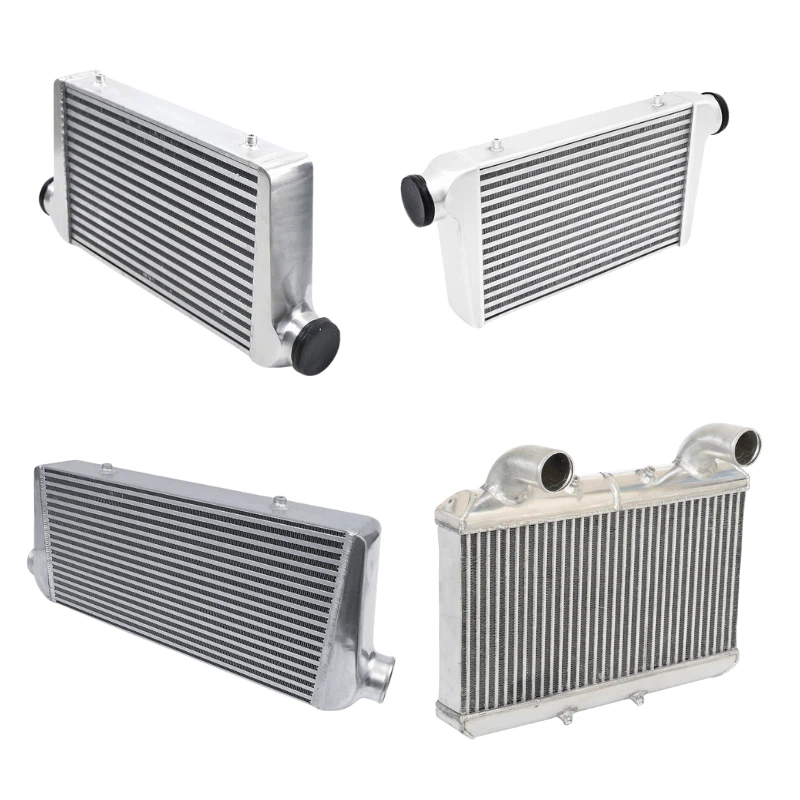
We offer both bar - and - plate and tube - and - fin intercooler cores, allowing our customers to choose the design that best suits their application. Our cores are available in various sizes and configurations, and we can also customize the design to meet specific customer requirements.
In addition to high - quality products, we also provide excellent customer service. Our team of experts is available to answer any questions you may have about our products and to help you select the right intercooler core for your application.
Related Products
We also offer a range of related products to complement our aluminum intercooler cores. These include Intercooler Aluminium, Aluminum Intercooler Radiator, and 3 Inch Intercooler Piping Kit. These products are designed to work together to provide a complete intercooling solution for your vehicle.

Why Choose Our Aluminum Intercooler Cores?
- High Cooling Efficiency: Our intercooler cores are designed to provide maximum cooling efficiency, ensuring that your engine receives the coolest and densest intake air possible.
- Durability: Made from high - quality aluminum materials, our intercooler cores are built to last. They are resistant to corrosion and can withstand the high pressures and temperatures associated with turbocharged and supercharged engines.
- Customization: We understand that every application is unique, which is why we offer customized intercooler core solutions. Our team of engineers can work with you to design a core that meets your specific requirements.
- Competitive Pricing: We are committed to providing our customers with high - quality products at competitive prices. Our efficient manufacturing processes and economies of scale allow us to offer cost - effective solutions without sacrificing quality.
Contact Us for Purchase and Negotiation
If you are interested in purchasing our aluminum intercooler cores or any of our related products, we encourage you to contact us. Our sales team is ready to assist you with any questions you may have and to guide you through the purchasing process. Whether you are an automotive enthusiast looking to upgrade your vehicle's performance or a professional in the automotive industry, we have the products and expertise to meet your needs.
References
- Heywood, J. B. (1988). Internal Combustion Engine Fundamentals. McGraw - Hill.
- Cengel, Y. A., & Boles, M. A. (2015). Thermodynamics: An Engineering Approach. McGraw - Hill Education.
- Taylor, C. F. (1966). The Internal - Combustion Engine in Theory and Practice. MIT Press.