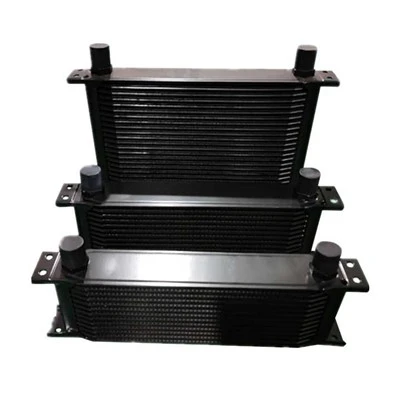
As a trusted supplier of 4-core aluminum radiators, I'm excited to delve into the assembly process of these crucial cooling components. Aluminum radiators, especially those with a 4-core design, are widely used in various industries due to their excellent heat dissipation capabilities, lightweight nature, and durability. In this blog post, I'll walk you through the step-by-step assembly process of a 4-core aluminum radiator, highlighting the key stages and the importance of each step.
1. Material Preparation
The first stage in the assembly process is material preparation. High-quality aluminum is the primary material for 4-core aluminum radiators, chosen for its high thermal conductivity and corrosion resistance. We source premium-grade aluminum sheets and tubes that meet strict industry standards. These materials are then cut to the appropriate sizes according to the radiator's design specifications.
The aluminum sheets are used to form the core fins, which play a vital role in increasing the surface area for heat transfer. The tubes, on the other hand, are responsible for carrying the coolant through the radiator. Precise cutting is essential to ensure a proper fit during the assembly process and to optimize the radiator's performance.
2. Fin Manufacturing
Once the aluminum sheets are cut, they are sent to the fin manufacturing stage. The fins are typically made using a finning machine, which creates a series of thin, closely spaced fins on the aluminum sheets. These fins significantly increase the surface area of the radiator, allowing for more efficient heat transfer.
The finning process involves a series of operations, including slitting, corrugating, and forming. The slitting operation cuts the aluminum sheet into narrow strips, while the corrugating operation creates a series of ridges and valleys on the strips. Finally, the forming operation shapes the corrugated strips into the desired fin pattern.
The fins are then cleaned and coated with a thin layer of flux to improve their soldering properties. The flux helps to remove any oxidation on the aluminum surface and promotes the flow of solder during the brazing process.
3. Tube Bending and Assembly
While the fins are being manufactured, the aluminum tubes are bent into the appropriate shape. The tube bending process is carefully controlled to ensure that the tubes fit precisely into the fin stack. The bent tubes are then inserted into the fin stack, creating a core assembly.
The core assembly is held together using a series of clamps or fixtures to ensure that the tubes and fins remain in place during the brazing process. The core assembly is then inspected to ensure that all the tubes are properly aligned and that there are no gaps or misalignments between the tubes and the fins.
4. Brazing
The core assembly is then sent to the brazing furnace for soldering. Brazing is a critical step in the assembly process, as it permanently joins the tubes and fins together, creating a strong and leak-proof bond.
The brazing process involves heating the core assembly to a high temperature in a controlled atmosphere. The flux on the fins and tubes helps to melt the solder, which flows into the joints between the tubes and the fins. As the solder cools and solidifies, it forms a strong bond between the tubes and the fins.
The brazing furnace is carefully controlled to ensure that the temperature and atmosphere are optimal for the brazing process. The temperature must be high enough to melt the solder but not so high that it damages the aluminum or the fins. The atmosphere in the furnace is typically a mixture of nitrogen and hydrogen, which helps to prevent oxidation of the aluminum during the brazing process.
5. Header and Tank Assembly
After the brazing process, the core assembly is cooled and inspected for any defects. If the core assembly passes the inspection, it is then ready for the header and tank assembly.
The headers and tanks are typically made of aluminum or plastic and are used to distribute the coolant evenly throughout the radiator. The headers are attached to the ends of the tubes, while the tanks are attached to the sides of the core assembly.


The header and tank assembly is typically done using a combination of mechanical fasteners and seals. The mechanical fasteners, such as bolts or screws, hold the headers and tanks in place, while the seals prevent any coolant leaks.
6. Pressure Testing
Once the header and tank assembly is complete, the radiator is pressure tested to ensure that it is leak-proof. The pressure testing process involves filling the radiator with a liquid or gas and applying a pressure to the system. The radiator is then inspected for any leaks or pressure drops.
The pressure testing process is typically done using a pressure testing machine, which can apply a precise amount of pressure to the radiator. The pressure testing machine is also equipped with sensors that can detect any leaks or pressure drops in the system.
If the radiator passes the pressure testing, it is then ready for final assembly and packaging.
7. Final Assembly and Packaging
The final assembly stage involves adding any additional components, such as mounting brackets, hoses, or fans, to the radiator. These components are carefully selected to ensure that they are compatible with the radiator and that they meet the customer's specifications.
Once the final assembly is complete, the radiator is cleaned and inspected for any defects. If the radiator passes the inspection, it is then packaged and prepared for shipment.
The packaging is designed to protect the radiator during transit and to ensure that it arrives at the customer's location in perfect condition. The radiator is typically wrapped in a protective plastic film and placed in a sturdy cardboard box.
Conclusion
The assembly process of a 4-core aluminum radiator is a complex and precise operation that requires a high level of skill and expertise. Each stage of the process, from material preparation to final assembly and packaging, is critical to ensuring the quality and performance of the radiator.
At our company, we are committed to providing our customers with the highest quality 4-core aluminum radiators. We use the latest technology and manufacturing processes to ensure that our radiators meet or exceed industry standards. Our team of experienced engineers and technicians carefully monitors every stage of the assembly process to ensure that each radiator is built to perfection.
If you're in the market for a high-quality 4-core aluminum radiator, we invite you to explore our product range. We offer a wide variety of radiators, including 2 Row Aluminum Radiator, 3 Core Aluminum Radiator, and 360mm Aluminum Radiator – High. Our radiators are designed to meet the needs of a wide range of applications, from automotive to industrial.
Contact us today to discuss your specific requirements and to learn more about how our 4-core aluminum radiators can help you achieve optimal cooling performance. We look forward to working with you!
References
- "Aluminum Radiator Manufacturing Process," Aluminum Association.
- "Heat Transfer in Radiators," ASME Journal of Heat Transfer.
- "Brazing of Aluminum Components," Welding Journal.