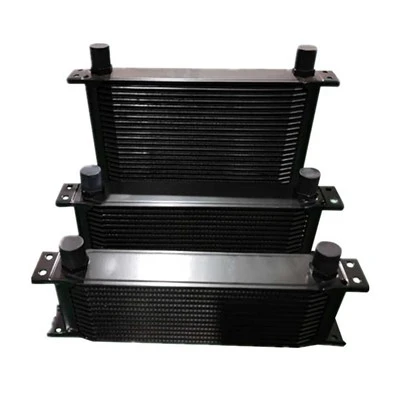
Hey there! As a supplier of all aluminum intercoolers, I've been getting a lot of questions lately about how the tube diameter of an all aluminum intercooler affects air flow. So, I thought I'd sit down and write a blog post to clear things up.


First off, let's talk about what an intercooler does. An intercooler is a crucial component in a turbocharged or supercharged engine. Its main job is to cool down the compressed air coming from the turbocharger or supercharger before it enters the engine. Cooler air is denser, which means more oxygen can be packed into each cylinder. This results in better combustion, more power, and improved fuel efficiency.
Now, onto the tube diameter. The tube diameter of an all aluminum intercooler plays a significant role in determining the air flow characteristics. There are a few key aspects to consider when looking at how tube diameter affects air flow.
Air Flow Resistance
One of the most important factors is air flow resistance. Think of it like this: if you're trying to push water through a small straw, it's going to be a lot harder than pushing it through a big pipe. The same principle applies to air flowing through the tubes of an intercooler.
Smaller tube diameters generally mean higher air flow resistance. When the tubes are narrow, the air has to squeeze through a smaller space. This causes the air to slow down and creates more turbulence. Turbulence is not your friend when it comes to efficient air flow. It can lead to pressure drops, which means the engine has to work harder to draw in the air.
On the other hand, larger tube diameters result in lower air flow resistance. The air can move more freely through the tubes, with less turbulence and fewer pressure drops. This allows the engine to breathe more easily and can lead to better performance.
Heat Transfer
Another important consideration is heat transfer. The main purpose of an intercooler is to cool the air, and the tube diameter can have an impact on how effectively this happens.
Smaller tube diameters typically offer more surface area per unit volume. This means that there is more area for the heat from the air to transfer to the walls of the tubes. Since aluminum is a great conductor of heat, this can be beneficial for heat transfer. The air spends more time in contact with the tube walls, allowing it to lose more heat.
However, as we mentioned earlier, smaller tubes also have higher air flow resistance. This can limit the amount of air that can pass through the intercooler, which in turn can reduce the overall heat transfer capacity.
Larger tube diameters, while having less surface area per unit volume, allow for greater air flow. This means that more air can pass through the intercooler in a given amount of time. Even though the air spends less time in contact with the tube walls, the sheer volume of air flowing through can result in significant heat transfer.
Balancing Act
So, what's the best tube diameter for an all aluminum intercooler? Well, it's a bit of a balancing act. You want to find a tube diameter that offers a good compromise between low air flow resistance and efficient heat transfer.
For high - performance applications where maximum air flow is crucial, larger tube diameters are often preferred. These can handle high volumes of air with minimal pressure drops, allowing the engine to reach its full potential. For example, in racing cars or high - powered street vehicles, intercoolers with larger tube diameters are commonly used.
However, if you're looking for a more balanced approach, or if space is a constraint, a medium tube diameter might be the way to go. It can offer a reasonable amount of air flow while still providing decent heat transfer.
Our Products
At our company, we offer a wide range of all aluminum intercoolers with different tube diameters to suit various applications. Whether you're a racing enthusiast looking for maximum performance or a daily driver wanting a reliable upgrade, we've got you covered.
Check out our Aluminum Intercooler Connector, which is designed to work seamlessly with our intercoolers. It ensures a tight and leak - free connection, allowing for optimal air flow.
Our Aluminum Intercooler Radiator is another great option. It's built with high - quality aluminum to provide efficient heat transfer and is available in different tube diameters to meet your specific needs.
And of course, our Intercooler Aluminium series offers a variety of intercooler designs, each carefully engineered to balance air flow and heat transfer.
Contact Us
If you're interested in learning more about our all aluminum intercoolers or have any questions about how tube diameter affects air flow, don't hesitate to reach out. We're here to help you find the perfect intercooler for your vehicle. Whether you're a DIY mechanic or a professional tuner, we can provide you with the information and support you need.
We understand that every engine is different, and that's why we offer customized solutions. Our team of experts can work with you to determine the best tube diameter and intercooler design for your specific application. So, get in touch and let's start the conversation about taking your engine's performance to the next level.
References
- Heywood, J. B. (1988). Internal Combustion Engine Fundamentals. McGraw - Hill.
- Crolla, D. A. (2001). Vehicle Dynamics. SAE International.
- Taylor, C. F. (1985). The Internal Combustion Engine in Theory and Practice. MIT Press.