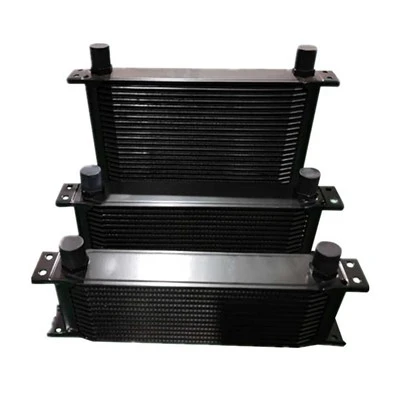
Do all aluminum intercoolers have a high heat transfer coefficient?
As a seasoned supplier of all aluminum intercoolers, I've encountered numerous inquiries regarding the heat transfer coefficients of these essential automotive components. The question "Do all aluminum intercoolers have a high heat transfer coefficient?" is both common and crucial, as it directly impacts the performance and efficiency of engines in various applications.
First and foremost, it's important to understand what a heat transfer coefficient represents. In simple terms, the heat transfer coefficient is a measure of how effectively a material can transfer heat from one medium to another. For aluminum intercoolers, this means the ability to dissipate the heat generated by compressed air from the turbocharger or supercharger before it enters the engine's intake manifold. A higher heat transfer coefficient indicates better heat dissipation, which in turn leads to cooler intake air temperatures and improved engine performance.
Aluminum is widely recognized for its excellent thermal conductivity, which is one of the primary reasons it's the material of choice for intercooler construction. Compared to other metals such as steel or copper, aluminum has a relatively high thermal conductivity, allowing it to transfer heat more efficiently. This inherent property gives aluminum intercoolers a significant advantage when it comes to heat transfer.
However, it's a misconception to assume that all aluminum intercoolers have a high heat transfer coefficient. Several factors can influence the heat transfer performance of an aluminum intercooler, and not all intercoolers are created equal.
One of the most critical factors is the design of the intercooler. The internal structure of the intercooler, including the shape and size of the tubes and fins, plays a vital role in determining its heat transfer efficiency. Intercoolers with a larger surface area, achieved through the use of more fins or a more complex fin design, can provide more contact points for heat exchange between the compressed air and the surrounding air. This increased surface area allows for more efficient heat transfer and can result in a higher heat transfer coefficient.
For example, some advanced Aluminum Intercooler Radiator designs feature micro-channel tubes and louvered fins. These innovative designs maximize the surface area available for heat transfer while minimizing the pressure drop across the intercooler. As a result, they can achieve significantly higher heat transfer coefficients compared to traditional intercooler designs.
Another factor that affects the heat transfer coefficient is the quality of the aluminum used in the intercooler's construction. High-quality aluminum alloys with better thermal properties can enhance the heat transfer performance of the intercooler. Additionally, the manufacturing process can also have a significant impact. Intercoolers that are precision-manufactured with tight tolerances and proper brazing or welding techniques can ensure better thermal contact between the tubes and fins, leading to improved heat transfer.
The operating conditions of the intercooler also play a role in its heat transfer performance. The flow rate of the compressed air and the ambient air temperature can affect how efficiently the intercooler can dissipate heat. For instance, in high-performance applications where the engine is generating a large amount of boost, the intercooler may need to handle a higher volume of compressed air. In such cases, an intercooler with a higher heat transfer coefficient is essential to prevent the intake air temperature from rising too high.


Moreover, the installation of the intercooler can impact its performance. Proper installation ensures that the intercooler is positioned in a location where it can receive adequate airflow. If the intercooler is installed in a cramped space or is obstructed by other components, it may not be able to dissipate heat effectively, resulting in a lower heat transfer coefficient.
As a supplier of all aluminum intercoolers, we understand the importance of providing high-quality products with excellent heat transfer performance. Our 3 Inch Intercooler Piping Kit and Intercooler Aluminium are designed and manufactured to meet the highest standards. We use advanced design techniques and high-quality aluminum alloys to ensure that our intercoolers have a high heat transfer coefficient.
We also offer a range of customization options to meet the specific needs of our customers. Whether you're looking for an intercooler for a high-performance racing application or a more standard automotive use, we can provide a solution that suits your requirements.
In conclusion, while aluminum intercoolers have the potential to have a high heat transfer coefficient due to the excellent thermal conductivity of aluminum, not all aluminum intercoolers are created equal. The design, quality of materials, manufacturing process, operating conditions, and installation all play a role in determining the heat transfer performance of an aluminum intercooler.
If you're in the market for an all aluminum intercooler and are looking for a product with a high heat transfer coefficient, we encourage you to reach out to us. Our team of experts can provide you with detailed information about our products and help you select the right intercooler for your application. We're committed to providing the best solutions and ensuring that our customers are satisfied with their purchase. Contact us today to start the procurement discussion and take your engine's performance to the next level.
References
- Incropera, F. P., & DeWitt, D. P. (2002). Fundamentals of Heat and Mass Transfer. Wiley.
- Cengel, Y. A. (2007). Heat Transfer: A Practical Approach. McGraw-Hill.
- Heywood, J. B. (1988). Internal Combustion Engine Fundamentals. McGraw-Hill.