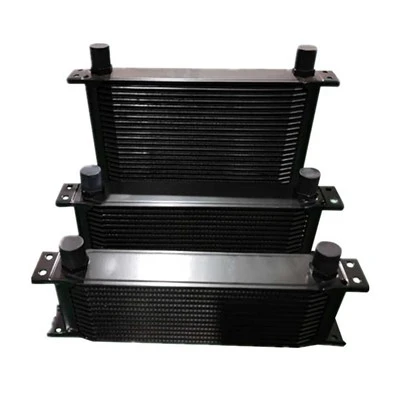
As a supplier of Japanese car radiators, I've encountered numerous inquiries from customers about various radiator - related issues. One question that often pops up is whether a bent fin in a Japanese car radiator can affect its performance. In this blog, I'll delve into the science behind radiators, explain the role of fins, and analyze how a bent fin can impact radiator efficiency.
Understanding the Basics of a Car Radiator
A car radiator is an essential component of the vehicle's cooling system. Its primary function is to dissipate heat generated by the engine. The engine produces an enormous amount of heat while running, and if this heat isn't properly managed, it can lead to overheating, which may cause severe damage to the engine components.
The radiator works on the principle of heat transfer. Coolant, a mixture of water and antifreeze, circulates through the engine, absorbing heat. The hot coolant then flows into the radiator through the inlet hose. Inside the radiator, the coolant passes through a series of tubes. These tubes are surrounded by fins, which significantly increase the surface area available for heat dissipation. As air passes over the fins and tubes, heat is transferred from the coolant to the air, and the cooled coolant returns to the engine through the outlet hose.
The Role of Fins in a Radiator
Fins play a crucial role in the radiator's heat - dissipation process. They are thin, metallic structures that are attached to the radiator tubes. The increased surface area provided by the fins allows for more efficient heat transfer. According to the laws of thermodynamics, the rate of heat transfer is directly proportional to the surface area through which the heat is being transferred. By increasing the surface area, the fins enable the radiator to transfer heat from the coolant to the surrounding air more effectively.
In addition to increasing the surface area, fins also enhance the airflow around the tubes. They act as a guide for the air, ensuring that it flows smoothly over the tubes and carries away the heat. This is especially important in modern radiators, where the design is optimized for maximum heat transfer efficiency.
How a Bent Fin Can Affect Radiator Performance
Now, let's address the main question: can a bent fin in a Japanese car radiator affect its performance? The answer is yes, and here's how.
Reduced Surface Area
When a fin is bent, a portion of its surface area is no longer available for heat transfer. As mentioned earlier, the surface area is a critical factor in the heat - dissipation process. A bent fin reduces the overall surface area of the radiator, which in turn decreases the rate of heat transfer. This means that the radiator will be less effective at cooling the coolant, and the engine may start to run hotter than normal.
Impaired Airflow
Bent fins can also disrupt the airflow around the radiator tubes. Fins are designed to guide the air in a specific pattern over the tubes. When a fin is bent, it can block or redirect the airflow, preventing it from flowing smoothly over the tubes. This disrupted airflow reduces the efficiency of the heat - transfer process because the air is not able to carry away the heat as effectively. In some cases, a bent fin can create a dead zone where the air flow is minimal, further reducing the radiator's ability to cool the coolant.
Potential for Clogging
A bent fin can also increase the risk of clogging. The space between the fins is designed to allow air to pass through freely. When a fin is bent, it can narrow the gap between the fins, making it easier for dirt, debris, and insects to get trapped. Over time, this buildup can further impede the airflow and reduce the radiator's performance.
Real - World Impact on the Vehicle
The impact of a bent fin on the radiator's performance can have several real - world consequences for the vehicle.


Engine Overheating
The most obvious consequence is engine overheating. If the radiator is not able to cool the coolant effectively, the engine temperature will rise. Overheating can cause a variety of problems, including warped cylinder heads, blown head gaskets, and even engine seizure. These issues can be extremely costly to repair and may leave the vehicle inoperable.
Reduced Fuel Efficiency
An overheating engine can also lead to reduced fuel efficiency. When the engine runs hotter than normal, it has to work harder to maintain its performance. This increased workload requires more fuel, resulting in lower miles per gallon. Over time, this can add up to significant additional fuel costs for the vehicle owner.
Increased Wear and Tear
Higher engine temperatures can also cause increased wear and tear on the engine components. The heat can cause the metal parts to expand and contract more than normal, which can lead to premature wear and potential damage. This can shorten the lifespan of the engine and increase the likelihood of breakdowns.
Solutions for Bent Fins
If you suspect that your Japanese car radiator has a bent fin, there are a few solutions available.
Manual Straightening
In some cases, a bent fin can be manually straightened using a fin comb or a similar tool. This is a relatively simple and inexpensive solution, but it requires some care and precision. It's important to be gentle when straightening the fins to avoid causing further damage.
Replacement
If the bent fin is severely damaged or if there are multiple bent fins, it may be necessary to replace the radiator. As a Japanese car radiator supplier, we offer a wide range of high - quality radiators, such as the Vw Mk1 Aluminum Radiator, Honda Civic Radiator Aluminum, and Mazda Rx7 Aluminum Radiator. These radiators are designed to meet or exceed the original equipment manufacturer (OEM) specifications, ensuring optimal performance and reliability.
Conclusion
In conclusion, a bent fin in a Japanese car radiator can indeed have a significant impact on its performance. It can reduce the surface area available for heat transfer, impair the airflow, and increase the risk of clogging. These issues can lead to engine overheating, reduced fuel efficiency, and increased wear and tear on the engine. If you notice any signs of a bent fin in your radiator, it's important to address the issue promptly to avoid costly repairs and potential damage to your vehicle.
If you're in the market for a new Japanese car radiator or have any questions about radiator performance, feel free to reach out. We're here to help you find the best radiator solution for your needs and ensure that your vehicle runs smoothly and efficiently.
References
- Incropera, F. P., & DeWitt, D. P. (2002). Fundamentals of Heat and Mass Transfer (5th ed.). Wiley.
- Heywood, J. B. (1988). Internal Combustion Engine Fundamentals. McGraw - Hill.