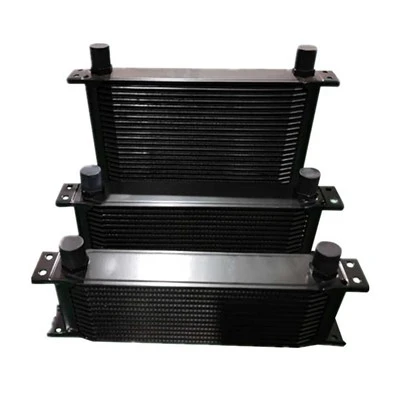
Hey there, fellow racing enthusiasts! I'm a supplier of racing aluminum radiators, and today I wanna chat about something that might not be on everyone's radar but is super important – the effect of a racing aluminum radiator on the engine's idle speed.
First off, let's talk about what an idle speed is. It's the rotational speed of an engine when the vehicle is stationary and the engine is running, with no load applied. You know when you're sitting at a red light, and your engine is just kind of humming along? That's the idle speed in action. It's a crucial aspect of an engine's performance, and anything that messes with it can cause all sorts of problems.
So, what's the deal with racing aluminum radiators? Well, these bad boys are designed to keep your engine cool under extreme conditions. Unlike stock radiators, which are made for everyday driving, racing aluminum radiators are built with high - performance in mind. They're usually lighter, more efficient at dissipating heat, and can handle higher coolant flow rates.


Now, let's dig into how they affect idle speed. One of the main ways is through engine temperature regulation. When your engine is running, it generates a ton of heat. If that heat isn't managed properly, the engine can overheat, which can lead to a whole host of issues, including a change in idle speed.
A well - functioning racing aluminum radiator, like the Summit Racing Aluminum Radiator, keeps the engine at an optimal temperature. When the engine is at the right temperature, all its components work as they should. The fuel injectors, for example, can deliver the correct amount of fuel, and the ignition timing remains accurate. This stability helps maintain a consistent idle speed.
On the other hand, if your radiator isn't up to the task, the engine might overheat. When an engine overheats, the air - fuel mixture can become too lean. That's because the hot air in the intake manifold is less dense, and the engine control unit (ECU) tries to compensate by reducing the amount of fuel injected. A lean air - fuel mixture can cause the engine to idle rough or even stall.
Another factor is the coolant flow. Racing aluminum radiators are designed to have better coolant flow compared to standard radiators. Good coolant flow ensures that the heat is evenly distributed and dissipated throughout the radiator. If the coolant flow is restricted, say due to a clogged radiator or a faulty water pump, the engine can develop hot spots. These hot spots can disrupt the normal operation of the engine and lead to fluctuations in idle speed.
Let's take a look at some real - world scenarios. Imagine you're at a race track, and you've just completed a high - speed lap. Your engine is hot, and you come into the pits. If you have a Griffin Aluminum Racing Radiator, it'll quickly cool down the engine. As the engine cools to the optimal temperature, the idle speed will stabilize. You won't have to worry about the engine misfiring or stalling while you're waiting for the next lap.
But if you have a sub - par radiator, the engine might stay too hot even after a few minutes in the pits. This can cause the idle speed to be erratic, and you might find yourself having to rev the engine a bit to keep it running. This is not only annoying but can also put extra stress on the engine.
Now, let's talk about the materials used in racing aluminum radiators. Aluminum is a great choice because it has excellent thermal conductivity. This means it can transfer heat from the coolant to the surrounding air very efficiently. A radiator made of high - quality aluminum, like those from Afco Aluminum Racing Radiator, can maintain a more consistent engine temperature, which in turn helps keep the idle speed stable.
In addition to temperature regulation, some racing aluminum radiators come with features that can indirectly affect idle speed. For example, some radiators have larger coolant capacities. A larger coolant capacity means that there's more coolant available to absorb heat. This can prevent rapid temperature changes in the engine, which is beneficial for maintaining a steady idle speed.
It's also worth mentioning that the installation of a racing aluminum radiator can sometimes lead to an initial adjustment period for the engine. When you first install a new radiator, the engine might take a little time to adapt to the new cooling system. During this period, you might notice some minor fluctuations in idle speed, but these usually go away once the engine has adjusted.
If you're experiencing problems with your engine's idle speed and you suspect it might be related to your radiator, there are a few things you can do. First, check the coolant level. Low coolant levels can cause overheating and affect idle speed. Also, look for any signs of leaks in the radiator or the coolant hoses. A leak can reduce the coolant flow and lead to uneven cooling.
Another thing to check is the radiator fins. If they're clogged with dirt, debris, or bugs, they won't be able to dissipate heat effectively. You can use a soft brush or compressed air to clean the fins.
In conclusion, a racing aluminum radiator plays a vital role in maintaining a stable engine idle speed. By regulating engine temperature, ensuring proper coolant flow, and using high - quality materials, these radiators help keep your engine running smoothly, even under the most demanding conditions.
If you're in the market for a racing aluminum radiator, whether you're a professional racer or just a weekend warrior, I'm here to help. I can provide you with the best products and advice to ensure that your engine performs at its best. Don't hesitate to reach out for a chat about your specific needs. Let's work together to get your engine running like a dream!
References
- Automotive Cooling System Handbook
- Engine Performance and Tuning Manual