

Hey there, car enthusiasts! As a supplier of American car radiators, I've seen my fair share of these crucial components up close. Today, I'm gonna break down the different parts of an American car radiator so you can have a better understanding of how they work and why they're so important for your vehicle.
Core
The core is the heart of the radiator. It's where the magic happens - the actual cooling process takes place here. The core consists of a series of tubes and fins. The tubes are what the coolant flows through. They're usually made of copper or aluminum. Aluminum is more common these days because it's lightweight and has good heat - transfer properties.
The fins are attached to the tubes. Their main job is to increase the surface area of the radiator. The larger the surface area, the more heat can be transferred from the coolant to the surrounding air. The fins are thin and closely spaced, which helps in maximizing heat dissipation. When the hot coolant flows through the tubes, the heat is transferred to the tubes and then to the fins. The air flowing through the radiator (either from the vehicle's movement or from the radiator fan) takes away the heat from the fins, cooling the coolant down.
Tanks
The tanks are located at the top and bottom of the radiator core. They serve as reservoirs for the coolant. The upper tank receives the hot coolant from the engine. It has an inlet where the coolant enters the radiator. The lower tank collects the cooled coolant after it has passed through the core. It has an outlet that sends the coolant back to the engine to repeat the cooling cycle.

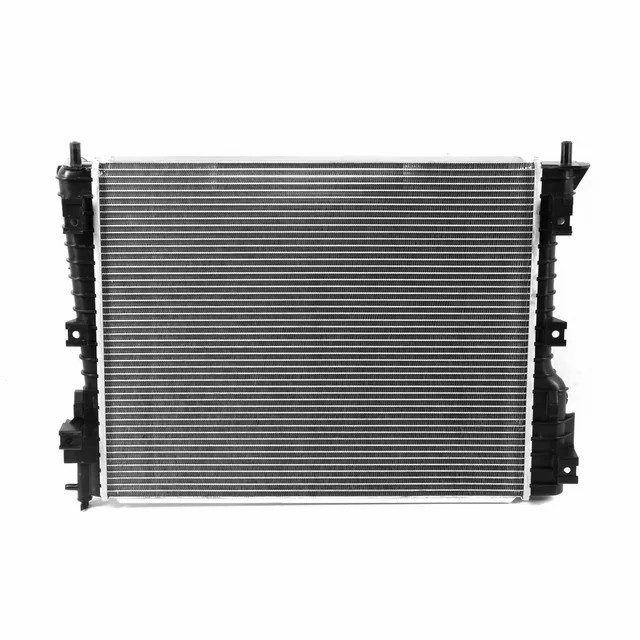
Tanks can be made of different materials. Plastic tanks are commonly used because they're lightweight and cost - effective. However, some high - performance radiators may have aluminum tanks. Aluminum tanks are more durable and can handle higher pressures, which is important for engines that generate a lot of heat.
Inlet and Outlet Hoses
The inlet and outlet hoses are like the veins and arteries of the radiator. The inlet hose connects the engine to the upper tank of the radiator. It carries the hot coolant from the engine to the radiator. The outlet hose, on the other hand, connects the lower tank of the radiator to the engine. It transports the cooled coolant back to the engine.
These hoses are usually made of rubber or a rubber - like material. They need to be flexible to accommodate the movement of the engine and the radiator. Over time, hoses can wear out, crack, or develop leaks. It's important to regularly inspect these hoses for any signs of damage and replace them if necessary.
Radiator Cap
The radiator cap may seem like a small part, but it plays a crucial role in the cooling system. It seals the radiator and maintains the pressure inside the system. When the coolant heats up, it expands. The radiator cap has a pressure - relief valve that allows the excess pressure to escape when it reaches a certain level. This prevents the radiator and hoses from bursting due to excessive pressure.
At the same time, when the engine cools down and the coolant contracts, the radiator cap has a vacuum valve. This valve allows air to enter the radiator to prevent a vacuum from forming inside the system. A faulty radiator cap can lead to coolant loss, overheating, and other cooling - system problems.
Fan
The radiator fan helps to increase the airflow through the radiator, especially when the vehicle is moving slowly or is stationary. There are two main types of radiator fans: mechanical and electric.
Mechanical fans are driven by the engine's crankshaft through a belt. They spin at a speed proportional to the engine's speed. These fans are simple and reliable, but they can consume some engine power, which can slightly reduce fuel efficiency.
Electric fans, on the other hand, are powered by the vehicle's electrical system. They are controlled by a thermostat or a temperature sensor. When the coolant temperature reaches a certain level, the sensor signals the fan to turn on. Electric fans are more energy - efficient because they only run when needed.
Shroud
The shroud is a plastic or metal cover that surrounds the radiator fan. Its main purpose is to direct the airflow through the radiator. It helps to ensure that all of the air pulled in by the fan passes through the radiator core, maximizing the cooling efficiency. Without a shroud, some of the air may bypass the radiator, reducing its ability to cool the coolant effectively.
Pressure Sensor
Some modern radiators are equipped with a pressure sensor. This sensor monitors the pressure inside the cooling system. If the pressure goes too high or too low, it can indicate a problem, such as a leak or a blockage. The pressure sensor sends a signal to the vehicle's onboard computer, which can then trigger a warning light on the dashboard to alert the driver.
Now that you know about the different parts of an American car radiator, you might be interested in some of the products we offer. We have a great selection of high - quality radiators, including the Fox Body Aluminum Radiator, the Mustang Aluminum Radiator, and the Ford Bronco Aluminum Radiator. These radiators are designed to provide excellent cooling performance and are built to last.
If you're in the market for a new radiator or have any questions about our products, don't hesitate to reach out. Whether you're a car enthusiast looking to upgrade your vehicle's cooling system or a mechanic in need of reliable radiator parts, we're here to help. Let's start a conversation and find the perfect radiator solution for your needs.
References
- Automotive Cooling Systems: Principles and Maintenance, various automotive textbooks
- Online resources from automotive manufacturers and industry experts


